



The five films
| # | Film | Payoff verb | Message | Worlds |
|---|---|---|---|---|
| 01 | ONE Trust | HÄLT | Reliability under pressure | Control rooms, fibre, BOS, held hands |
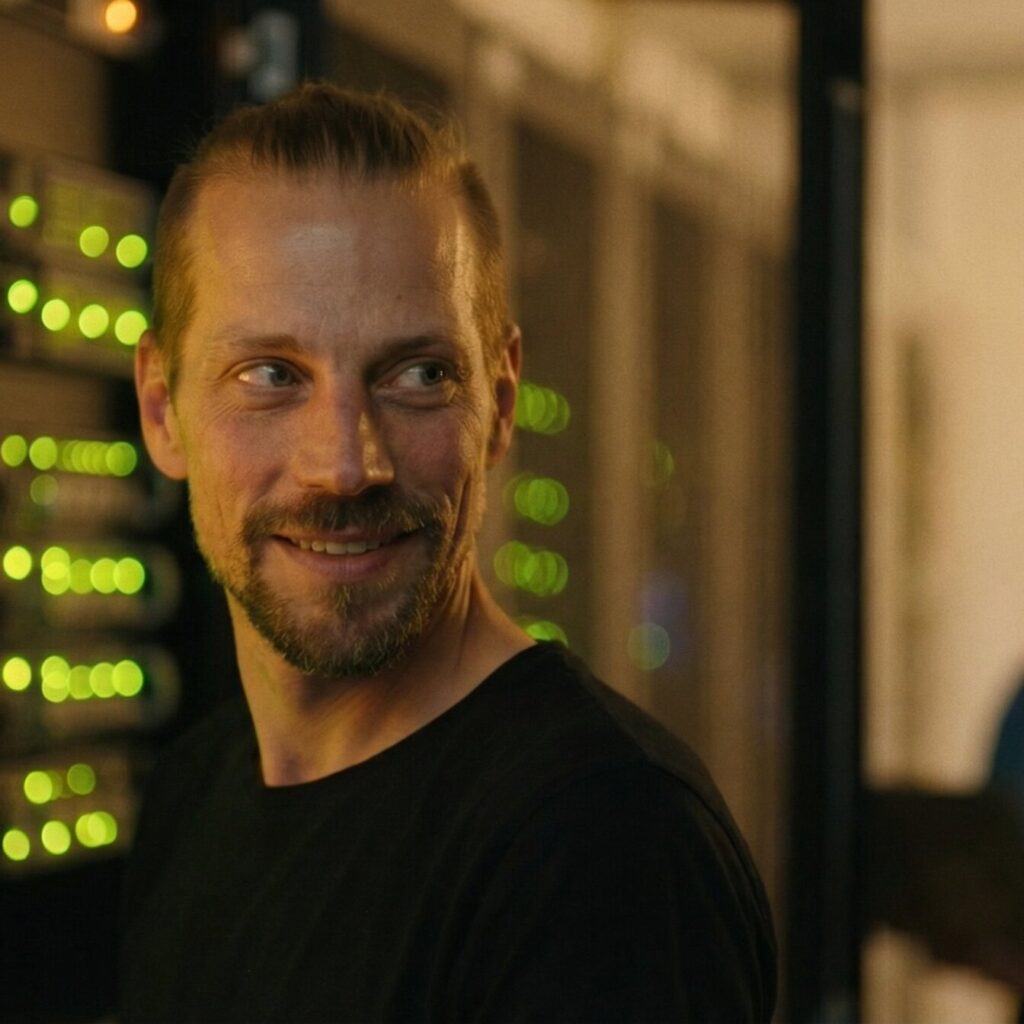
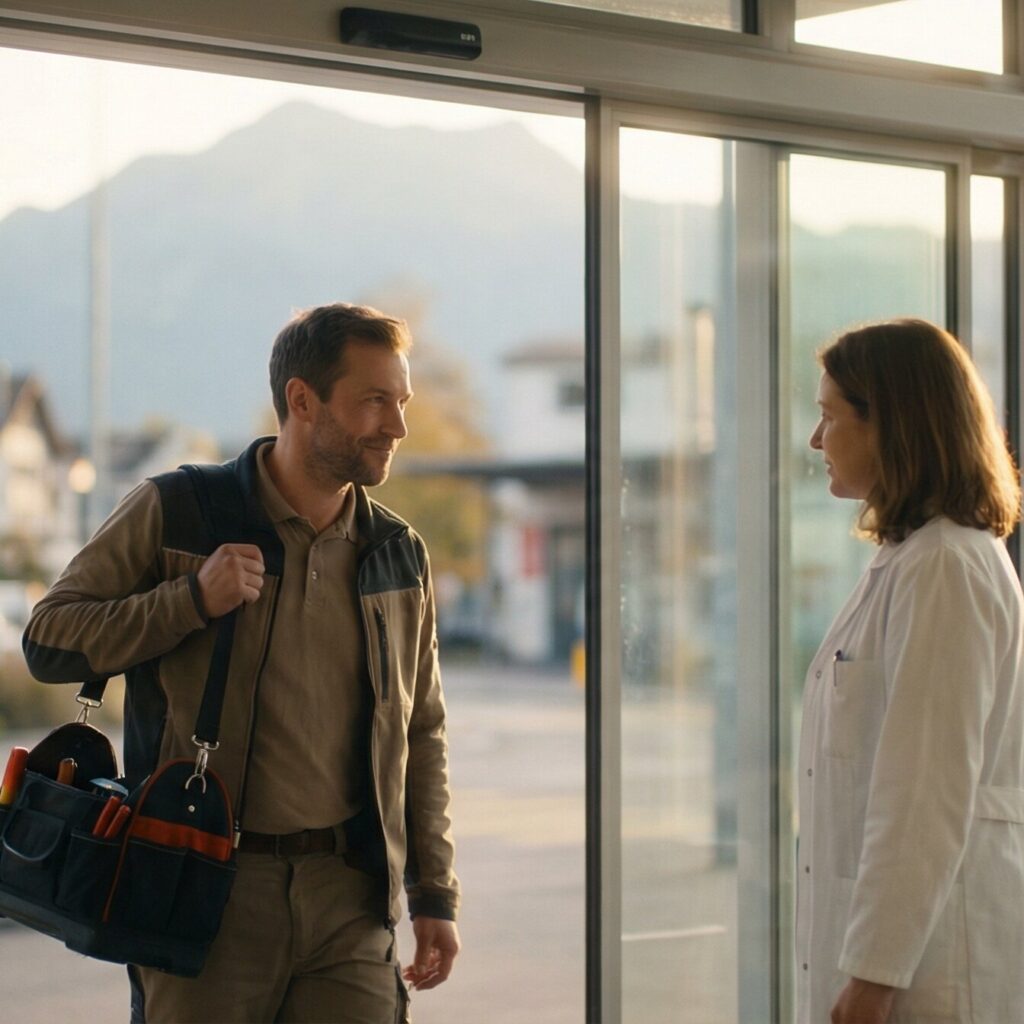
| 02 | ONE Happy Customer | BLEIBT | Customers who stay, and why | Server rooms, hospital doors, rooftops |
| 03 | ONE Future | LEUCHTET | Threshold, not promise | Circuit boards, construction sites, ridgelines |
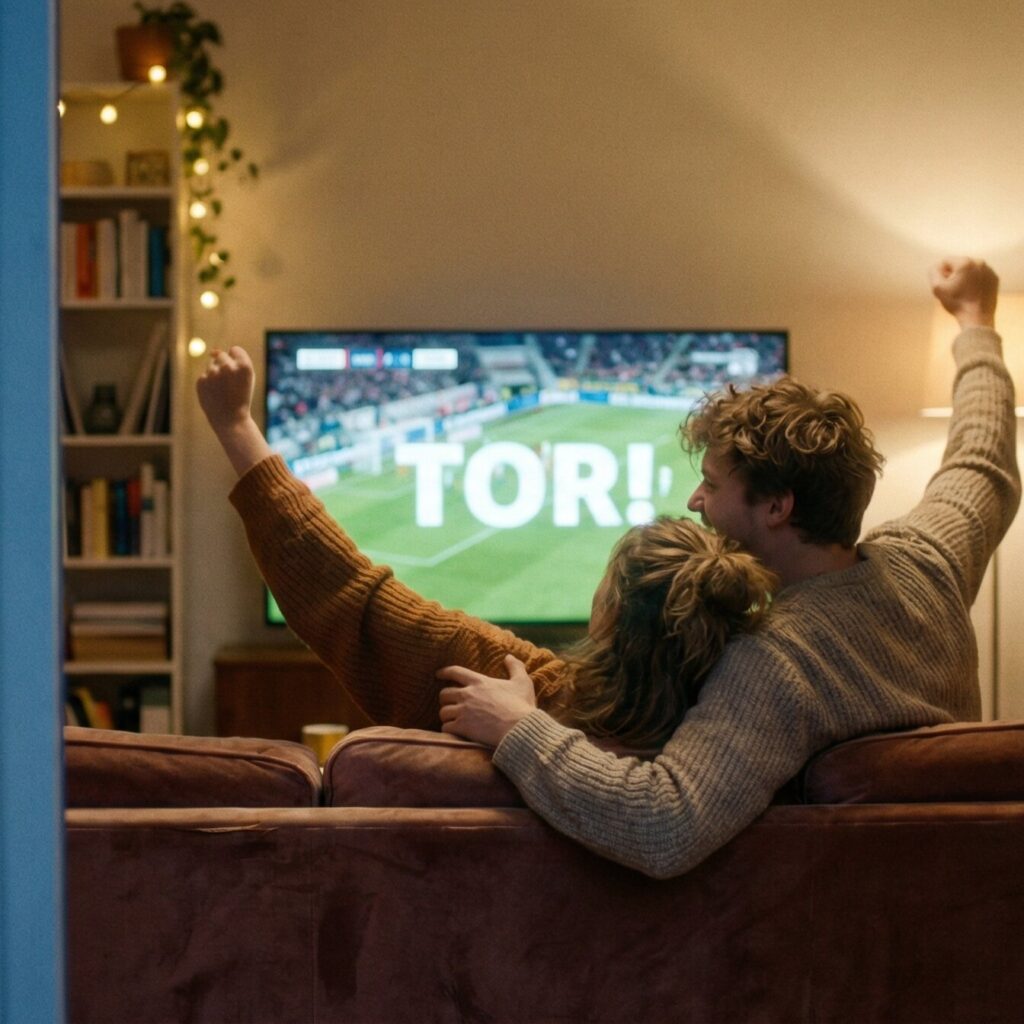
| 04 | ONE Family | EINT | Warmth as an action | A table: one setting, then full |
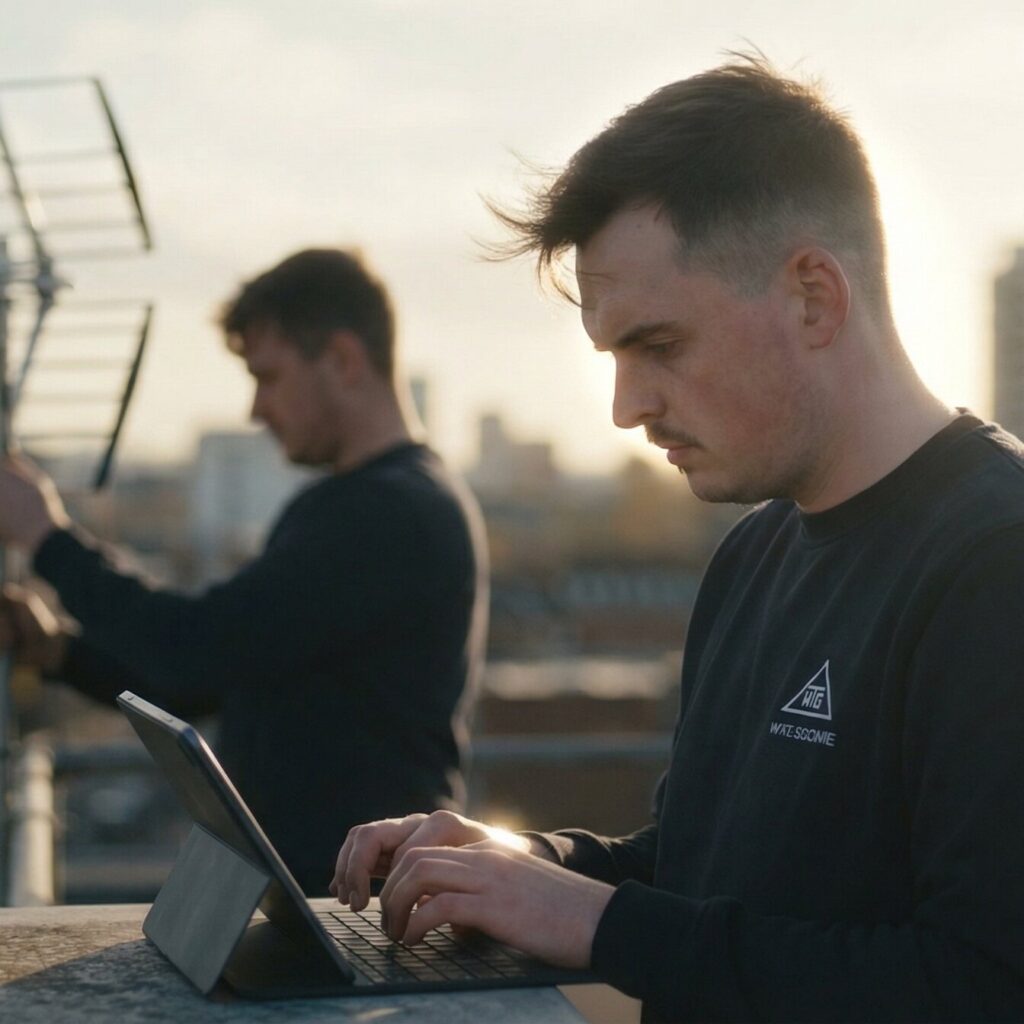
| 05 | ONE Way of Working | WIRKT | Where double work ends | One notebook instead of two, city lights |
THE HIDDEN SENTENCEHÄLT. BLEIBT. LEUCHTET. EINT. WIRKT. Five payoff verbs across five films, each doing double duty: a literal caption on what the viewer is watching, and, only in retrospect when the endcard names the film, a thematic statement about the merger. |
02. THE CORE IDEA
Most internal merger films fail the same way: they explain. A voice-over tells the audience what to believe about the new company, and the images illustrate the voice-over. The audience nods and forgets.
The ONE series refuses that model. Instead, each film runs on a single conceptual device: monosyllabic German verbs describing, literally, what the audience is seeing. A disponent watches. A fire engine protects. Hands connect. A dog finds. Someone catches. Hands hold.
For fifty seconds, the audience thinks they are reading simple captions. Then the endcard appears, ONE TRUST, and the verbs retroactively become something else. WACHT was not a description of a night shift. It was trust, watching. VERBINDET was not a fibre-optic cable clicking into a switch. It was trust, connecting. The film’s meaning is delivered to the audience backwards, by themselves, from pieces they have been unknowingly collecting.
Why it works on a live-event stage
- It respects the room. Employees at a merger event are not a passive audience. They are skeptical, distracted, talking to each other. A sermon loses them. A puzzle earns attention because they want to solve it.
- It survives language. The verbs are the shortest possible German, monosyllabic wherever the language permits. HÄLT. BLEIBT. EINT. They read in a glance, from the back row, on a projection screen.
- It compounds across films. By film three, the audience has learned the grammar. They are leaning in for the next verb. By film five, the revelation of the full sentence lands with the force of something they half-assembled themselves.
- It trusts the viewer. No voice-over. No tagline telling them how to feel. The films do their thinking in the gaps between the images and the words, which is the only place a brand film can actually move anyone.
Constraints that made the work possible
A five-film series with shared grammar needs rules. Without them, each film drifts toward its own style and the series stops reading as one piece. The following constraints emerged during development and were treated as non-negotiable by the locked version.
Language
- All on-screen and handwritten text in German. No exceptions. The campaign lives in a German-speaking event context, and bilingual text overlays would fracture the rhythm.
- Monosyllabic by default, multi-syllable by exception. LEUCHTET, ERINNERT, BEWAHRT and the other multi-syllable verbs are rhythmic breaks placed on purpose, never defaults.
- No verbs that break grammatically. Passive forms, archaic verbs, and verbs that need a preposition to make sense were cut. A payoff line has to stand alone. “Die Familie gehört” was eliminated on exactly this ground: it needs a complement to be a sentence.
- Every verb used only once across the series. No two films share a payoff. Near-duplicates like TEILS (which originally appeared in both 04 and 05) were split and replaced. The one exception is that verbs can echo within a single film as thematic rhymes.
Image
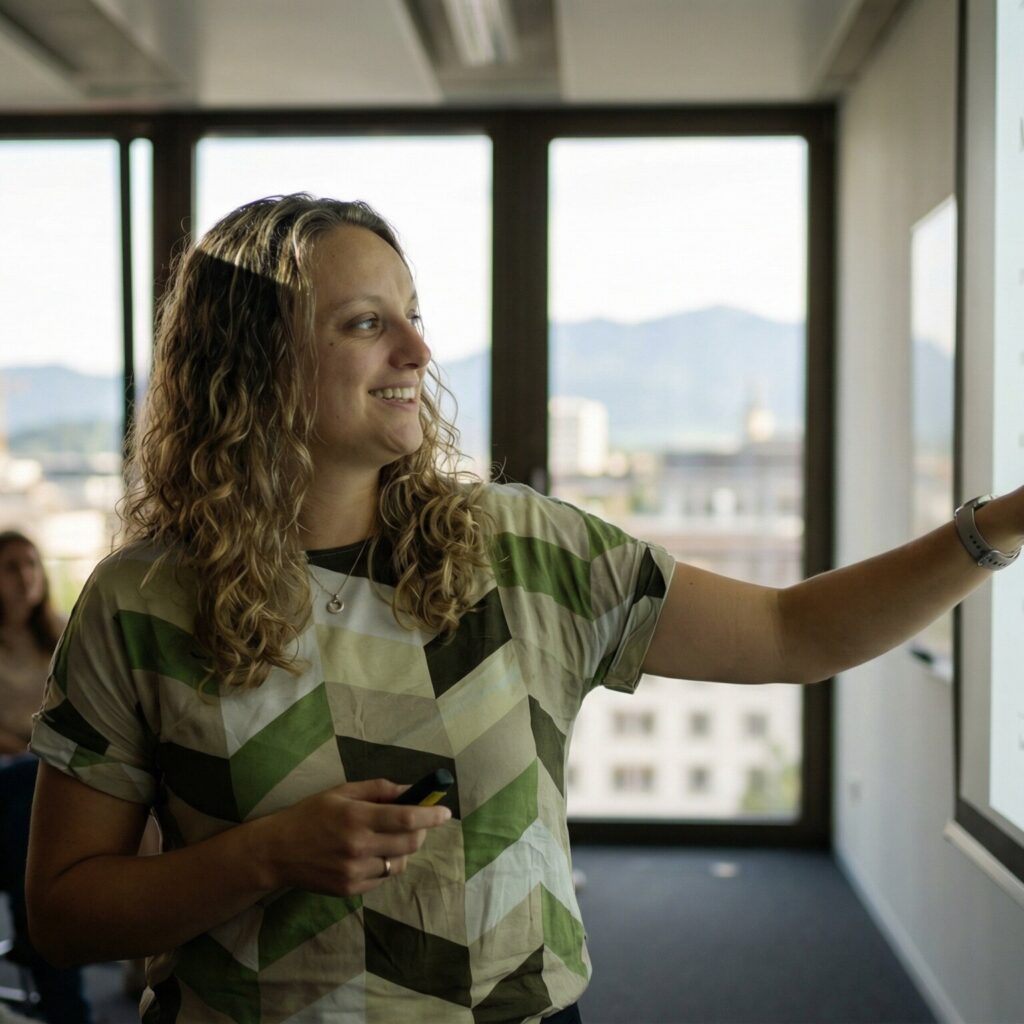
- Lived-in, modern, never sterile. Office environments must feel real: used keyboards, warm lamps, plants, wear on surfaces. Corporate-shiny was rejected across every film.
- Casual smart, not formal. No blazers. No lanyards. Characters dress the way people actually dress at work in 2026.
- Laptop screens never visible to camera. The moment a viewer sees a UI, the film becomes a product film. The technology is present, but always at the edge of frame.
- Warmth must be literal and active. In the Family film especially: warmth is a blanket being placed, a hand on a heat source, someone reaching across a table. Not an atmospheric glow.
- Natural behaviour, not staged. When AI generations came back looking posed, the fix was in the motion prompt: specifying unposed, overlapping, everyday movement, not better lighting.
Structure
- Every film is a bookend. The opening image returns, transformed, at the end. Film 01: the face we started with is no longer anonymous by the final frame. Film 04: the table that appeared empty is surrounded. Film 05: the first gesture is the last, completed.
- Six captions, one held silent. The first shot carries no overlay. The silence is the setup: the audience is waiting for a word that does not come, and the second shot lands harder because of it.
- Match cuts, not crossfades. Every transition between shots is a motion, colour, or gesture match. Crossfades appear only at the open and the close.
Pure AI, end to end
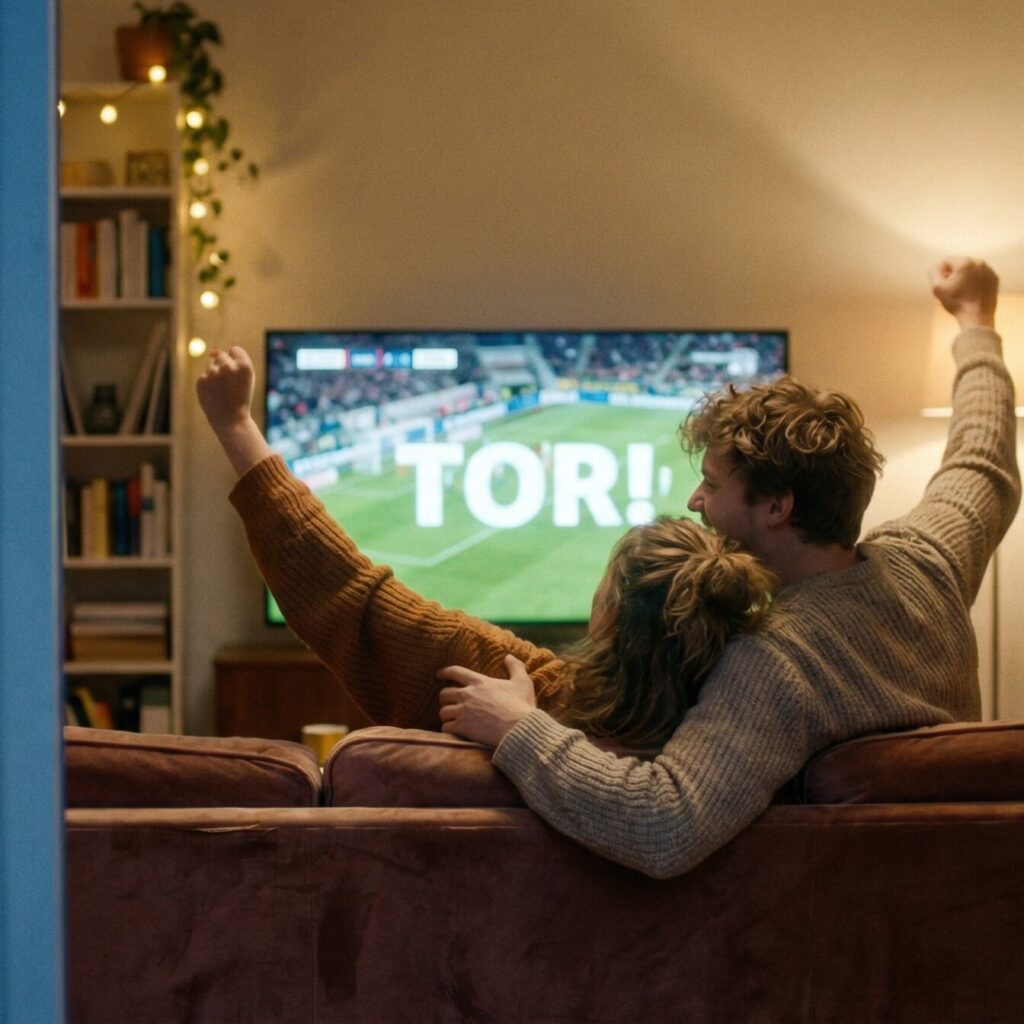
Every frame in every one of the five films is AI-generated. No shoot. No set. No crew on location. No actors, no props, no scouts, no permits. The entire campaign was produced inside a model stack, using prompts written with the precision of a cinematographer and the rewrite discipline of a director.
This matters for the work and for the claim. For the work, because it changed what was affordable: a 50-second cinematic brand film with nine distinct shots, four seasons, two species of rescue dog, a live control room, and a mountain rescue scene would be a six-figure production line in conventional filmmaking. Here, the cost was the time spent getting the prompts right. For the claim, because “Puzzle, nicht Predigt” asks the audience to trust the image. That trust has to survive the knowledge that no camera was ever in the room. It does, when the look is controlled tightly enough.
Four things, really
In retrospect, four decisions carried the whole piece. Everything else was execution against these four.
| 1 | Refusing to explain A merger film that says “we are now one company” is a film the audience has already forgotten. The ONE series never states its thesis; it stages it, so the audience arrives at it themselves. Every reviewer’s instinct to “add a line to make it clearer” was, in this work, the wrong instinct. |
| 2 | Trusting the caption A single verb under an image can do what a voice-over cannot: it can mean two things at once. WACHT is a description and a claim. HÄLT is a gesture and a promise. The caption layer is the entire dramatic engine of the series; it just pretends not to be. |
| 3 | One colour world Five films could have been five moods. Control rooms cold. Families warm. Construction sites grey. Instead, everything is one warm amber. Even the snow. Even the monitors. That single decision is what makes the series read as a series from the first frame. |
| 4 | The hidden sentence HÄLT. BLEIBT. LEUCHTET. EINT. WIRKT. The audience never hears the sentence spoken. They do not see it written out anywhere. But by the fifth film, they have it. And they walk out of the room carrying something they assembled themselves, which is the only version of a brand message that actually survives contact with real life. |