

02. The Challenge
A family day is harder to generate than a werewolf
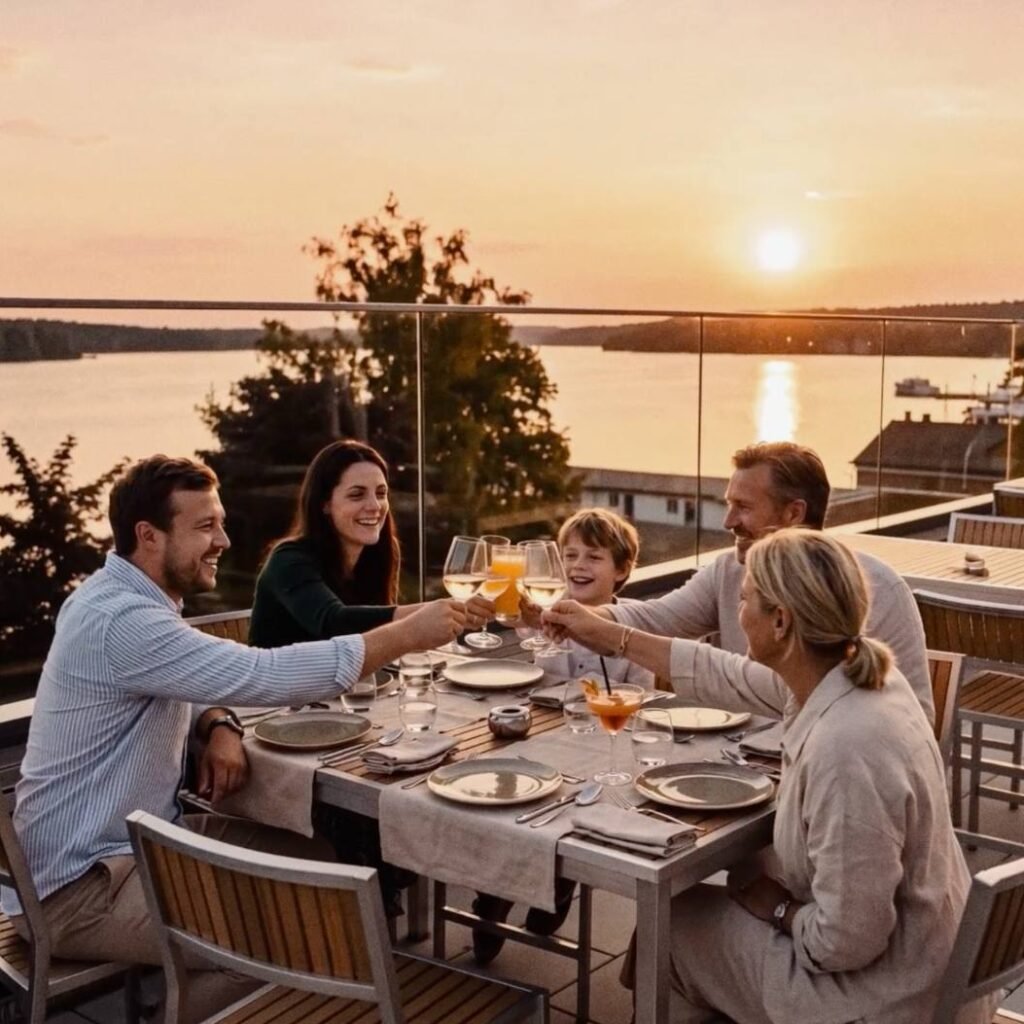
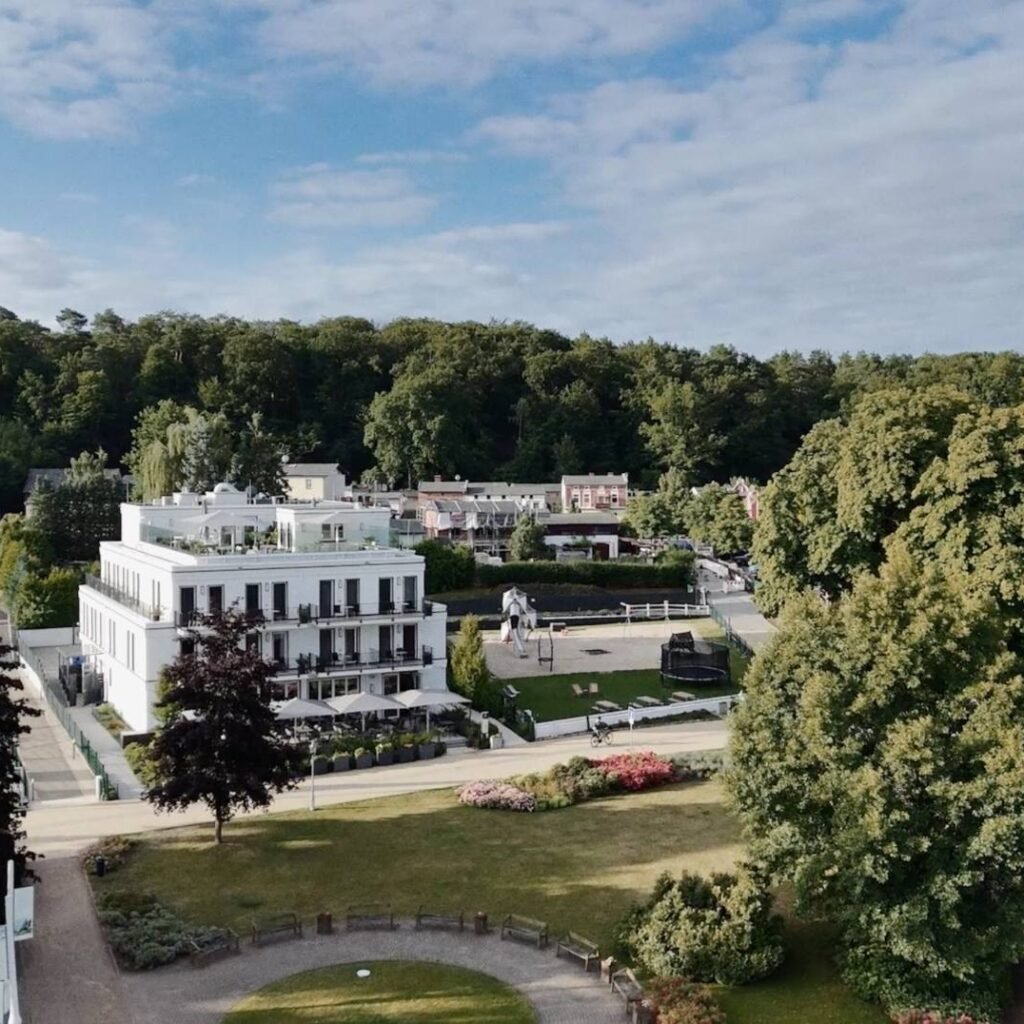
Real locations have to stay real. In a completely fictional AI commercial, almost every detail can be changed. Not here. Anyone who has been to Werbellinsee knows the jetty, the lawn, the view from the terrace. The AI was not to invent a different hotel, but to populate the existing one with believable people and situations. Every deviation in the image is a deviation from a place where the viewer may have lain last summer.
One family has to stay the same family across 19 shots. Two adults and children who sit on the shore in the morning, then have breakfast, go in the water, play minigolf, ride in the car, stand at the punchbag and sit by the fire in the evening, recognisable throughout. Generative models happily invent new people for every scene. A child who is seven in scene four and ten in scene five is noticed by everyone. The same haircut, the same clothes, the same build, for a whole day: that is the real consistency task of this film.
Children are the hardest subject for AI models. Proportions, faces and movements of children go wrong with generative models more often than anything else, and they are at the same time the subject where errors feel most uncomfortable. We needed children who splash, kick a ball, hold a minigolf putter and listen to a trainer, without anything about them looking unnatural.
People and place have to read as one shot. Perspective, light, scale and movement all have to fit so that an AI character on the real terrace looks photographed rather than inserted. That is a different task from a believable face: a perfect portrait in the wrong light gives itself away instantly.
Daylight forgives nothing. On our film for Bikerbar Silberwolf, night helped: moonlight, shadow and mist cover imprecision. Here almost everything plays outdoors in daylight. Water, sky, skin in sunlight, shadows on sand: daylight is the lighting condition most likely to give a generative model away. On top of that, a full arc of light across the day, from morning mist through midday sun to the blue hour at the fire.
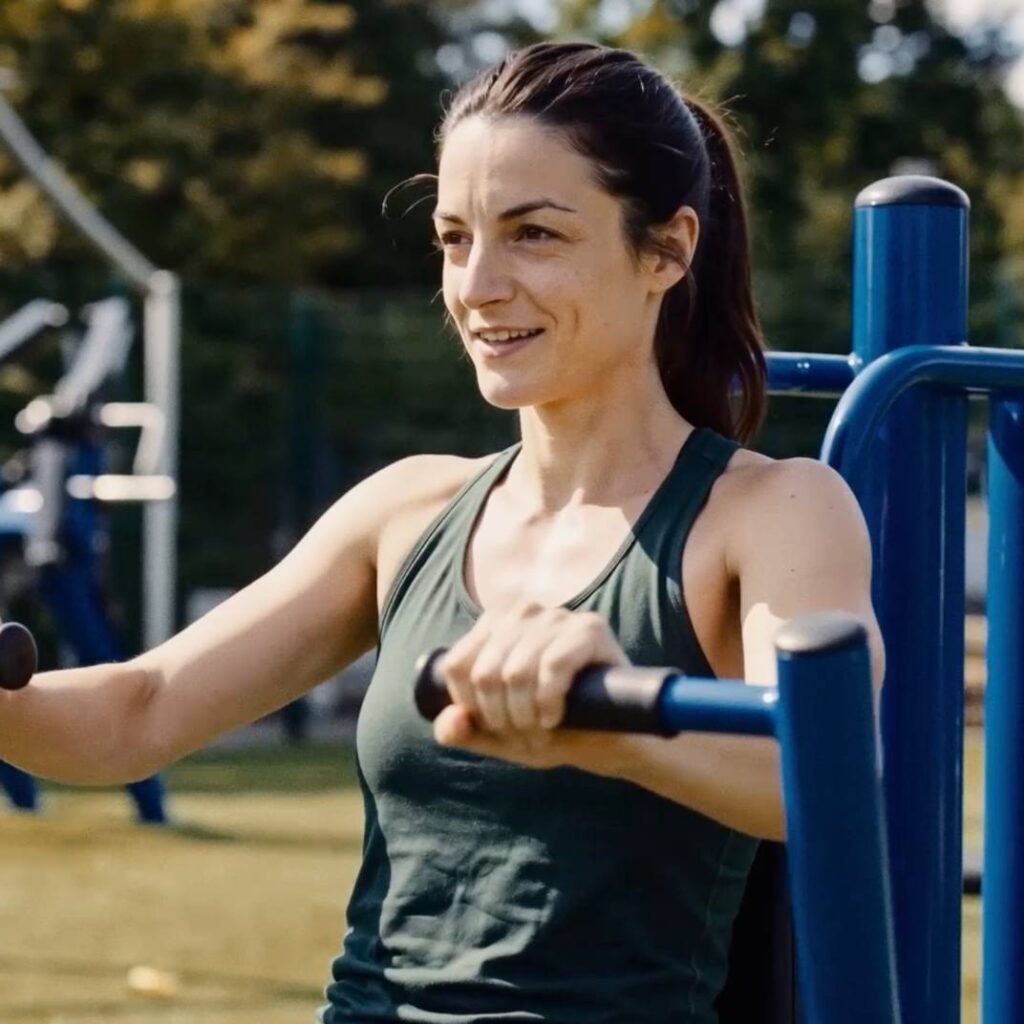
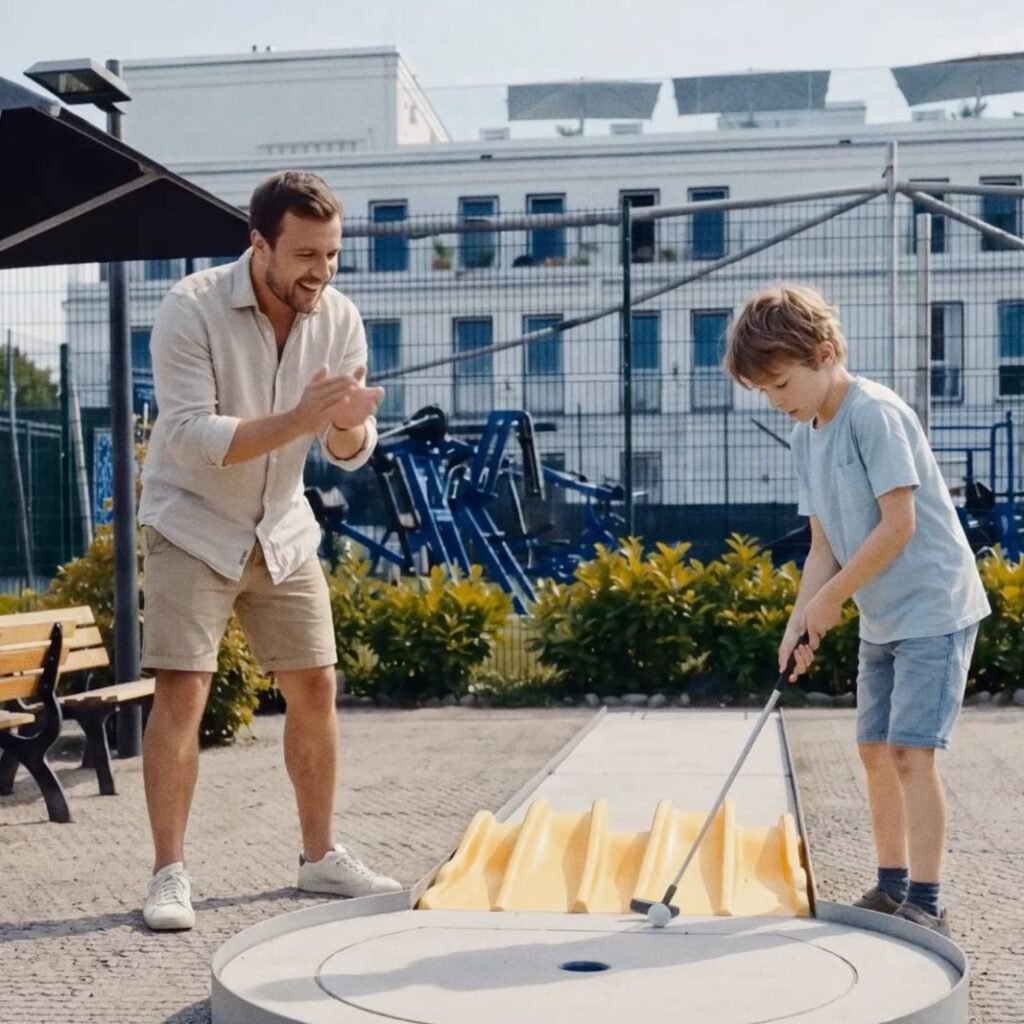
Many activities, many objects. A volleyball, giant chess pieces, a minigolf putter and ball, a football on the pitch, gym equipment, boxing gloves, a car pulling up, a pizza truck. Every interaction between a person and an object is a point where models fail: hands that don’t hold the putter properly, balls that hang in the air, figures reaching through objects.
The tone needs performance. “Humorous, warm, light” is a direction to actors who don’t exist. The father showing the children the swing, the child enjoying the drive, the trainer showing the youngsters their first punches with a wink: AI characters have to carry mood, not just presence.
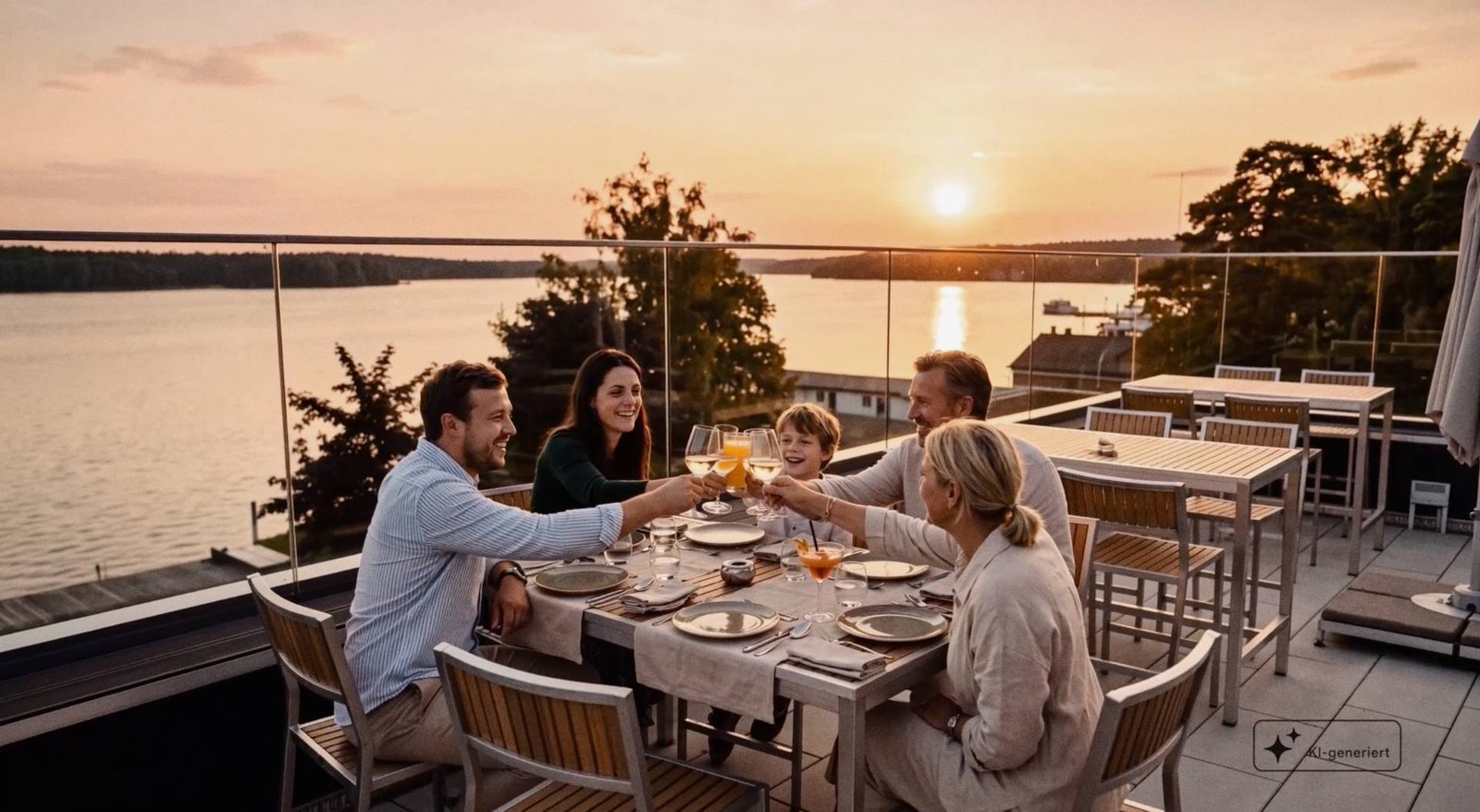
A scene from the AI-generated commercial.
03. The Approach
The location as the fixed foundation
Before an image was generated we built Hotel Fontane as a reference library: the lakeshore and jetty at different times of day, the lawn, the sandy beach, the restaurant with its window front, the terrace with its lake view, the apartment interiors, the minigolf course by the pavilion, the football pitch, the outdoor gym, the boxing club, the fire pit. Rather than letting the visual world be generated freely, the real locations were the foundation of every scene. From those photographs an empty stage was built for every location: the place without people, at the correct time of day, checked against the original photograph and approved before a single person entered it.
A family as a fixed cast
The people in the film were not generated scene by scene. They were created once. Every family member got a character sheet: face, hairstyle, build, clothing for this one day. So did the couple on the shore, the trainer, the guests at the fire. These sheets were approved before the first scene image and remained the only reference for every person for the whole film. We deliberately set the children up so that they have the same age, the same height and the same clothes in every scene. A change of clothing would have told a second day.
What mattered was that the people never became the subject of the film. They give the places life and convey what a stay could feel like. The star of the film is the hotel. The family is the reason you can picture yourself there.
When a face drifted in a scene, we reworked the face rather than regenerating the scene. And we bound the model to the reference in every scene instead of describing the person again. The plainer the instruction “this family, from these references”, the less the model invented.
Dramaturgy: one day, one arc of light
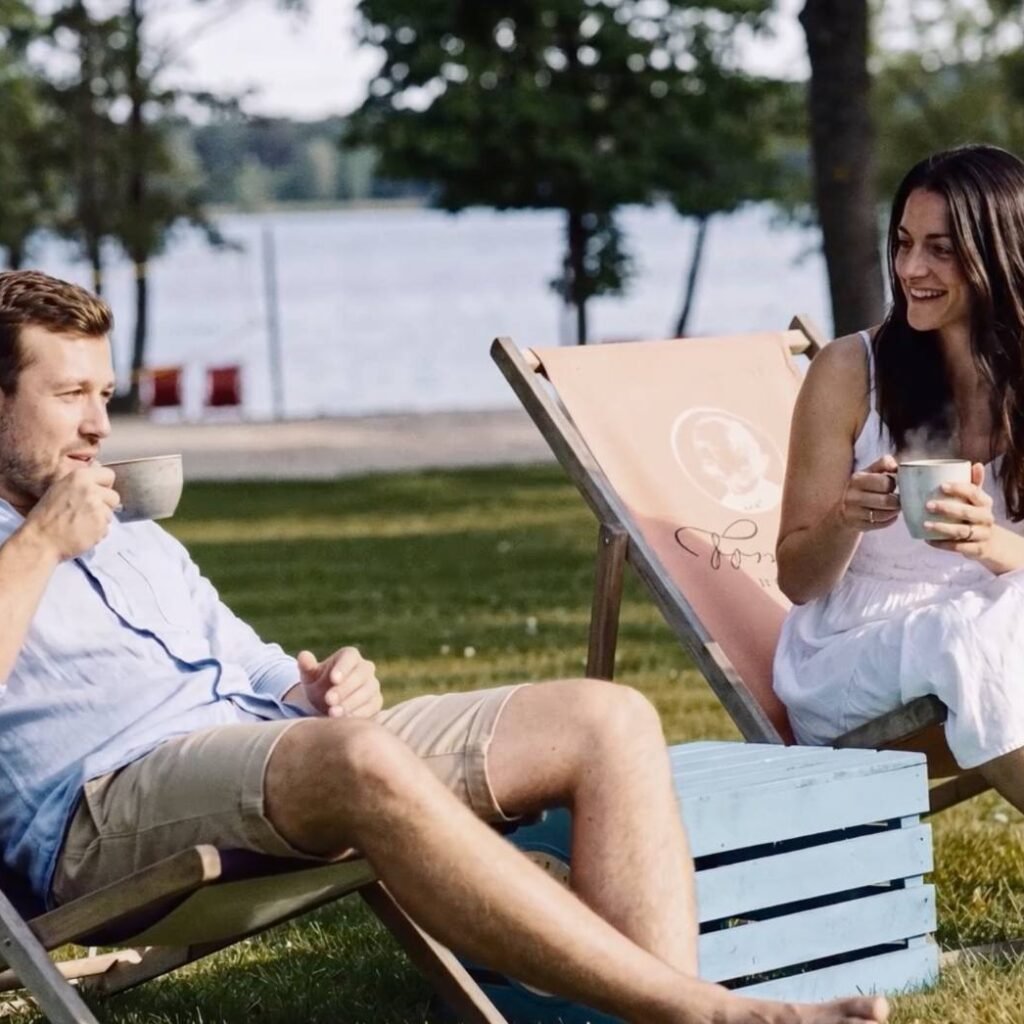
The film follows a single day. In the morning a couple sits in the mist on the shore, coffee in hand: “Sometimes all it takes is a place that clears your head.” Breakfast in the restaurant and on the terrace. A look inside the holiday apartment. Then the aerial over the grounds: “The lake is waiting for you. And it has time.” Children in the shallows, beach volleyball, giant chess under the trees, pizza from the truck right by the lake. Minigolf, football pitch, outdoor gym: “Here there’s something for everyone.” A brief cutaway in the car through the Brandenburg countryside and the arrival at the hotel. Then the boxing club, where the trainer shows the youngsters their first punches: “If you’re brave, you try something new.” And the evening: fire pit, music, dinner, the moon on the water. “And when the sun goes down, it gets cosy.” The family in silhouette against the sunset, then the logo.
That order wasn’t just narrative, it was technical. Every scene has its fixed time of day, and every location was built in exactly that light. The sun’s position at the fire, the height of the mist in the morning, the hardness of the shadows at midday: all part of the scene specification, not luck of the draw.
A storyboard with 19 shots
The storyboard held a timecode, camera note, scene content, voice-over line and a generated reference still for every shot. The client saw the whole day as a sequence of images before a single clip was animated. Two scenes were added at this stage: the lawn with beach, volleyball and chess, and the boxing club. Changes like that cost hours in a storyboard. On a set they would have meant another shoot day.
From still image to moving image
Only once location, family and objects were correct in the still was the keyframe approved and animated. This image-to-video workflow gives control over the design of every scene before motion is introduced. With direct text-to-video the model decides on people, places and light. With a keyframe-first approach the image is signed off and the model only adds motion. On a film with children this was the only defensible order: nobody wants to see a child’s face for the first time in moving footage.
Motion in small, clear beats
Water, balls, putters and children in one shot is too much for a model. We reduced every activity to a single, short, unambiguously described action: one putt at minigolf, one serve at volleyball, one child running into the shallows, one chess move. Who does what with which hand, where the ball goes, who is watching: every one of those questions was answered in advance. And we learned what to leave out. Gestures named too explicitly get exaggerated by the model. What should look natural gets less instruction, not more.
Quality control on every clip
After each video generation the clip was checked against four questions. Is that still the same family? Is that still the same place? Is the time of day right? Do hands, balls and water hold up? Clips that failed a question were regenerated, or trimmed in the edit so the error never becomes visible. For the scenes with children that check was stricter than anywhere else.
Post-production as the connective tissue
The approved sequences were cut, timed to the voice-over, scored with music and bound together with sound design: birds and water in the morning, crockery on the terrace, children’s voices on the beach, the serve at volleyball, the crackle of the fire. Grading had two jobs here: putting the placed characters into the same light as the location around them, and making the day’s arc of light believable. Every scene sits in its own hour, and together they make one day.
04. Production
Using AI to extend a real location
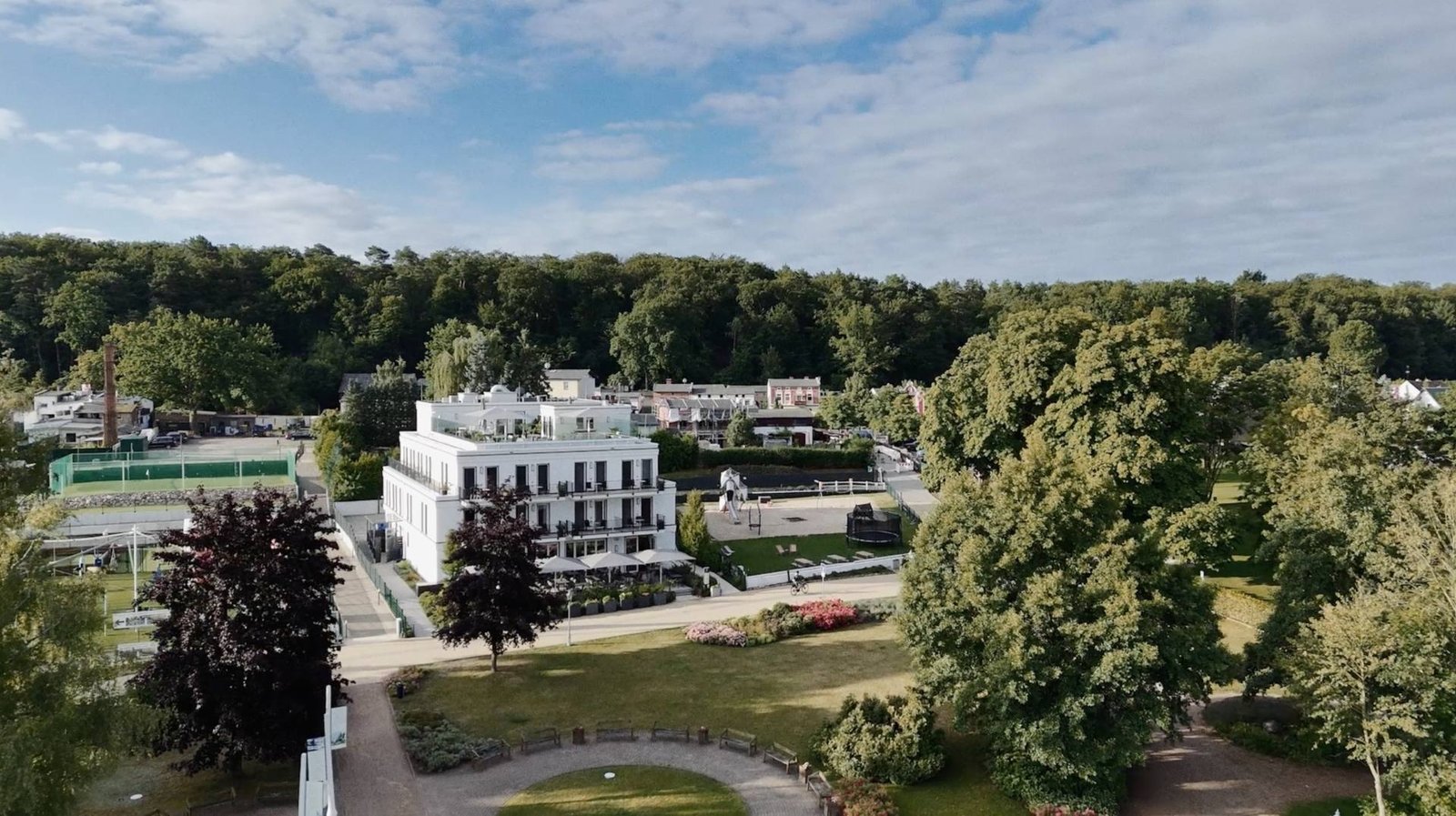
The film demonstrates an approach to AI production that is particularly relevant for hotels, restaurants and tourism destinations: the location does not need to be reinvented. Hotels usually already own high-quality photography and video of their rooms, restaurants and outdoor spaces. Exactly that material can serve as the foundation and be expanded with people, situations and movement. The real places remain the basis of the film, while the staging moves into digital production.
A conventional production of the same scenes would have needed a family with children as actors, with all the releases and working-hour limits that implies. Then a shoot day with morning mist, midday sun and dusk on a single day, weather risk included, a drone over the grounds, shots in the water, a night scene at the fire, styling, and extras for the restaurant, beach and volleyball court. Realistically that’s two to three shoot days with weather cover, for a film of a minute and a half.
In a hybrid AI workflow the production work moves off the set and into reference preparation, character development, storyboard, image development, generation with per-scene quality control, and post. The result shows a complete day in perfect weather, while the production costs a fraction of what the conventional route would have demanded.
There is a second effect: the hotel has no image rights in people to manage. The family in the film belongs to nobody. The film can run indefinitely without an actor withdrawing consent or a child growing up.
05. The Result
A real place, brought to life with AI
The result is a warm, light AI image film that deliberately combines reality with generative production. The locations are real. The people are AI-generated. That keeps Fontane Hotel recognisable as a real destination while allowing situations that go beyond conventional hotel and architectural photography. The film shows not only what the hotel looks like, but what staying there could feel like. And the family sitting in the mist on the shore in the morning is the same family standing in silhouette against the sunset that evening.
For the client that means a film for the website, social media, booking platforms and trade fairs that shows the whole offer in a minute and a half, with no actors, no image rights, no weather risk, and a day that exists exactly like this only in the film.
06. Frequently Asked Questions
Are the locations in the film AI-generated?
No. Every place in the film exists and was built from photographs of the hotel. AI was used to add people, situations and movement to those locations.
Are the guests in the film real people?
No. Every person in the film is an AI character, created before production as a fixed cast and agreed with the client. No real models or actors were filmed for any scene.
How does a family stay the same across a whole film?
Through character sheets that are created and approved once and from then on are the only reference for every person in every scene, and through checks on every keyframe and every clip. The children’s clothing, hair and age stay unchanged across the whole day.
Can children be shown in an AI image film?
Yes, and for many hotels that is precisely the reason to choose this route: no children in front of a camera, no parental releases, no expiring image rights. Children are the hardest subject for AI models, so we check children’s scenes more strictly than any other and approve them as stills before any motion is added.
Can existing hotel photography be used for this kind of film?
In principle, yes. Depending on quality and perspective, existing photography and video can serve as the starting point for the empty stages into which people and situations are later placed. Good photographs of the rooms and outdoor spaces are worth more to this workflow than any script.
Does this work in daylight and outdoors?
Yes. Daylight is more demanding than night, because water, sky and skin in sunlight reveal every imprecision. We first build every location as an empty stage at the correct time of day, check it against the original photograph, and only then place people into it.
What does an AI image film cost compared with a conventional shoot?
Actors, shoot days, styling, drone, weather cover and image rights all fall away. The effort sits in references, character development, concept, image development, generation and post. A film like this is produced for a fraction of the cost of a conventional production. We calculate the specific scope individually, based on runtime and number of scenes.
Can the same material be adapted for social media?
Yes. In addition to the main film, individual scenes and alternative versions can be produced for Reels, Shorts, ads and other formats. Because every scene exists as its own keyframe, vertical versions and standalone clips are possible without new production effort.
Which businesses is this kind of AI image film suited to?
Hotels, holiday resorts, restaurants and leisure businesses that want to show their real premises with a complete guest experience, without casting guests. Especially suitable when many offers need showing in a short time, or when children appear in the picture.
Does AI replace post-production?
No. Edit, timing, voice-over, music, sound design and grading remain decisive. On this film, grading was also where characters and locations were placed in a shared light and the day’s arc of light was brought together.
Planning an AI image film for your hotel?
We combine real locations with the possibilities of generative AI to create image films, commercials and social media content, from dramaturgy through references, characters, storyboard and image development to finished post-production. Tell us briefly about your property and we’ll show you which images become possible with a hybrid AI workflow.