

02. The Challenge
Invented creatures inside a place that has to be completely real
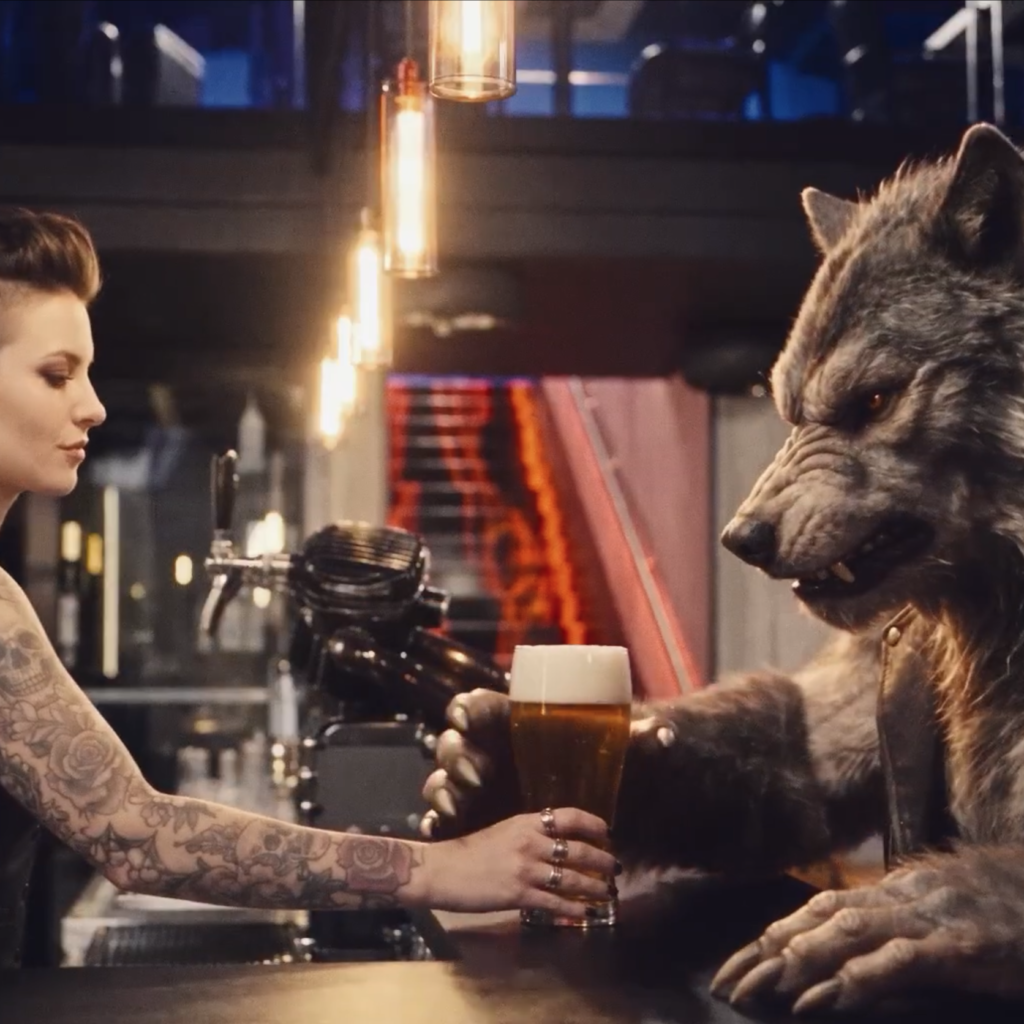
The werewolf doesn’t exist. The bar does. The idea depends on the transformation: riders who turn into werewolves under moonlight and keep riding in leather jackets. That creature is entirely generated. The bar, on the other hand, must never look invented. Both have to share the same frame, in the same light, without the viewer sensing a seam.
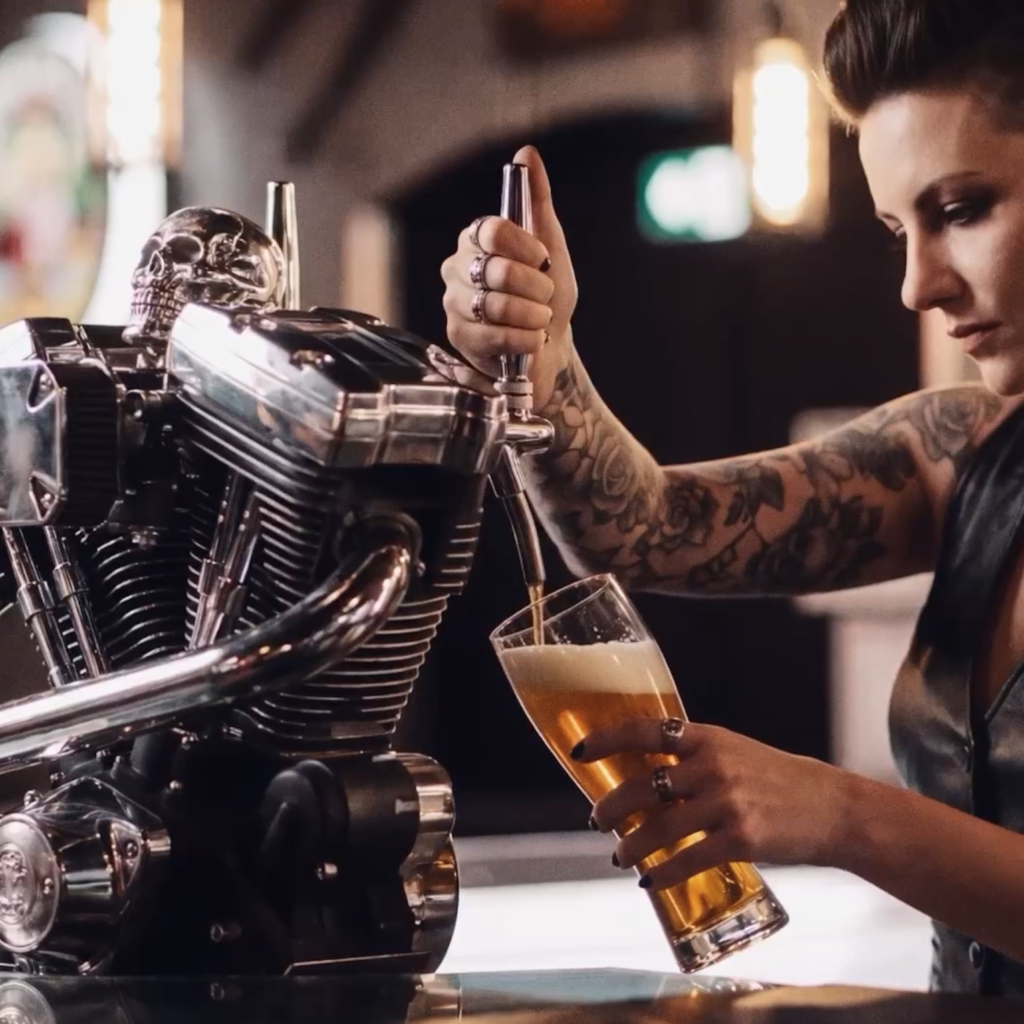
Six Harleys, one of them a one-off. The six motorcycles had to stay recognisable across the whole film. On top of that came the “Black Beauty”, the house’s custom Harley: a unique build that sits in the cigar room and appears in the wolf sequence. For that bike there was no room for interpretation. Tank, bars, seat, exhaust, every detail had to match the original. Generative models happily produce “a Harley”. We needed precisely this one.
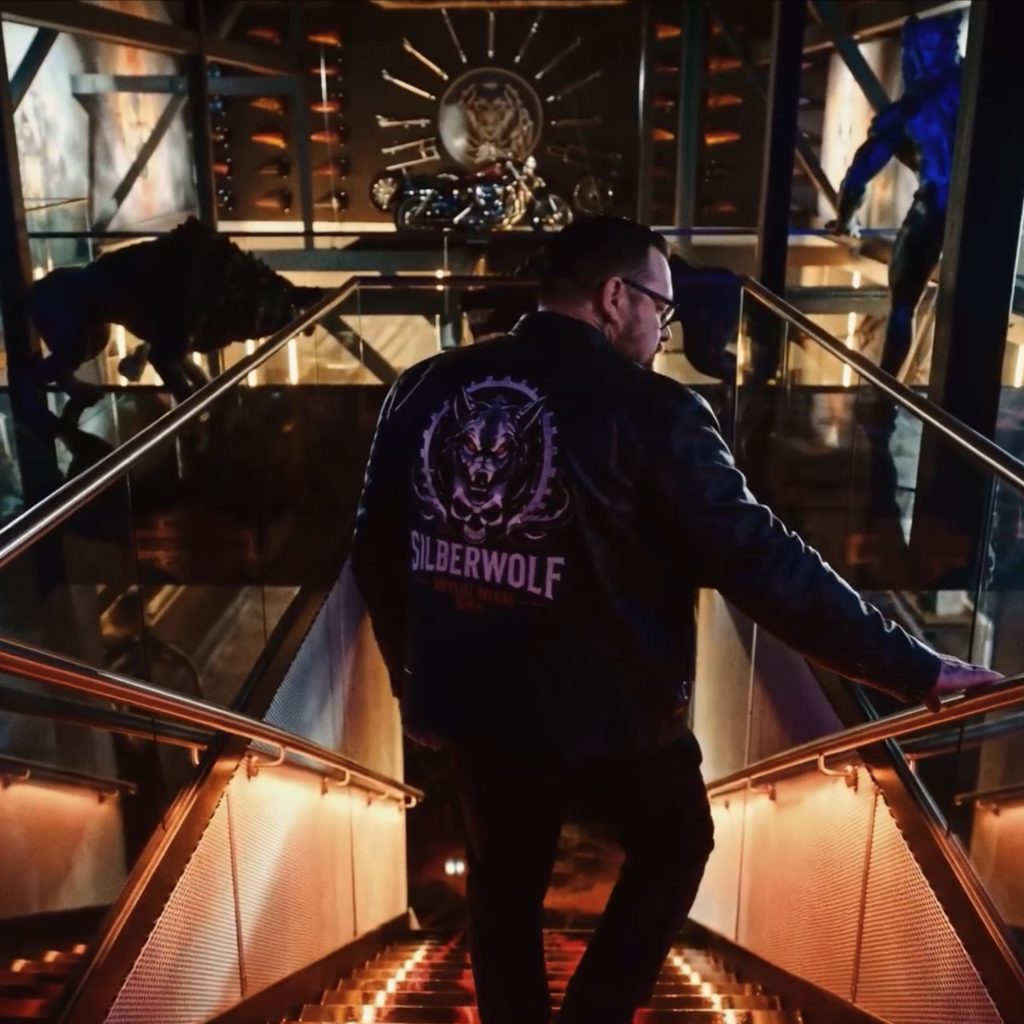
The logo has to be perfect. The wolf skull emblem appears in the fog around the moon, on jackets, on the wall and glowing above the entrance. AI models alter logos slightly with every generation: an extra spike, a different letterform, shifted proportions. For a brand, every one of those variations is an error.
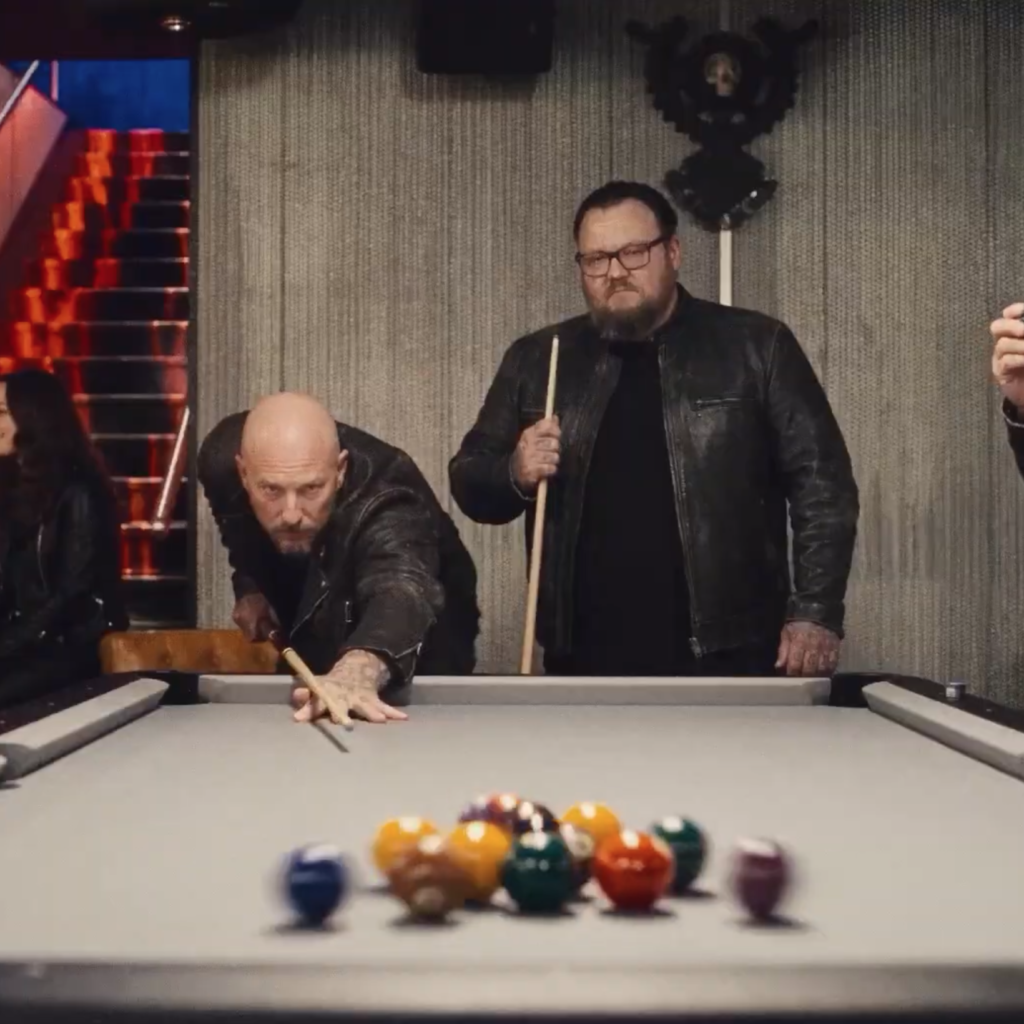
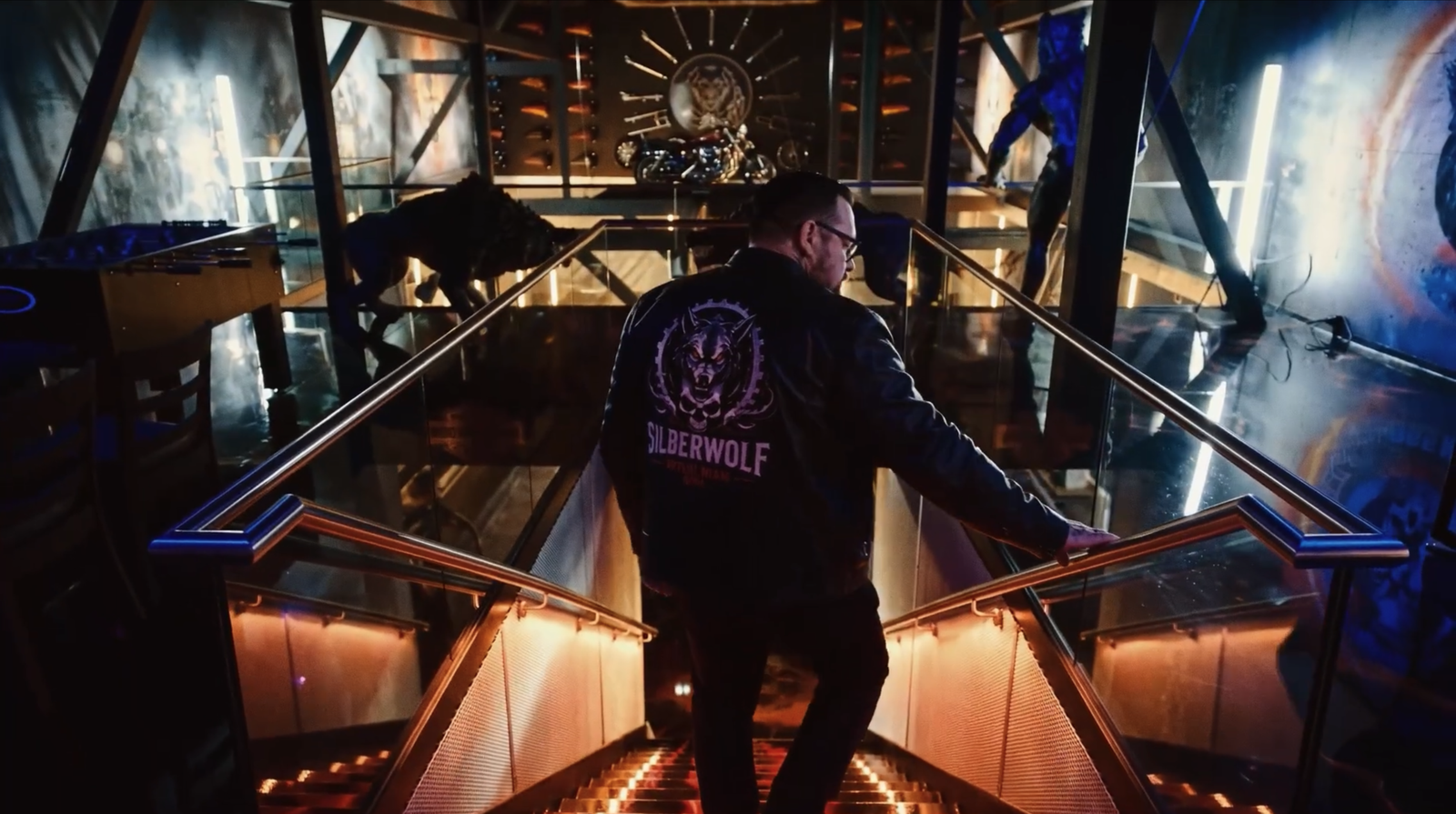
The rooms are real, one to one. Workshop, pool table, pinball, darts, cigar room, restaurant with spare ribs and steaks, bar with taps, courtyard, façade. All of it exists and had to appear on screen the way it stands on site. This is the real difficulty of generative video: consistency across shots is already hard with invented subjects. With a real location, every deviation is verifiable.
Four layers of consistency at once. Characters, motorcycles, werewolf and location all had to hold from shot to shot without one layer breaking another. A model that gets the bar right tends to change the werewolf. A prompt that keeps the werewolf stable tends to invent a new counter. That drift was the core problem of the project.
Eine Szene aus dem KI-Werbefilm.
03. The Approach
First we collected the reality
Before a single image was generated we built the location as a reference library: photographs of the bar, counter, taps, restaurant, workshop, pool table, pinball, darts, cigar room, courtyard and façade, from several angles and in different light. The Black Beauty was documented from every side. The logo was available as a clean vector file.
Those references were the basis for every generation that followed. We didn’t describe the rooms to the models. We showed them.
Dramaturgy: from the pack in the shadows to the bar
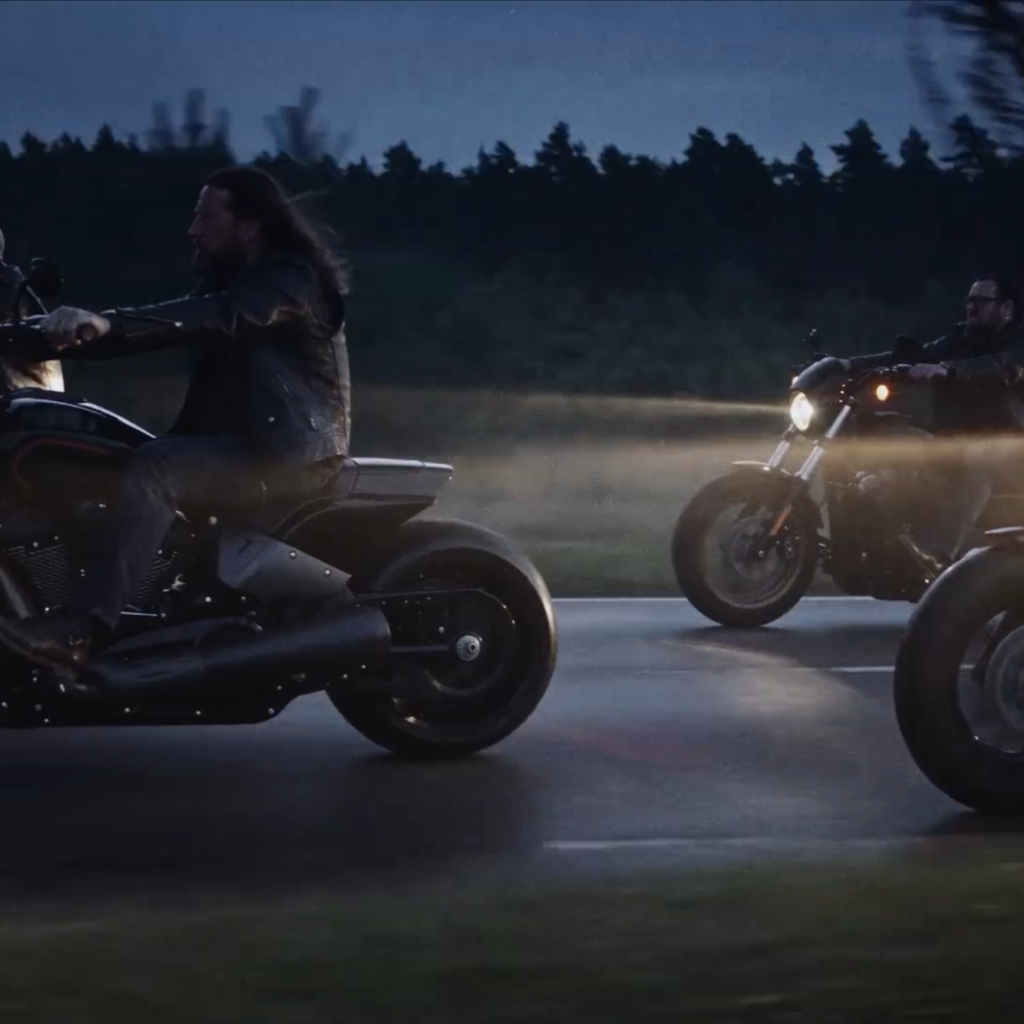
The story follows a single escalation. The Silberwolf emblem emerges from the moon through fog, then a dark country road in the Brandenburg forest with six machines. Shadows between the trunks, wolves running silently beside the bikes, eyes glowing. An old brick wall the pack sprints along, one wolf leaping over a rider. The riders brake hard, the moon breaks through, the howling starts, the transformation happens. Only then does the bar arrive: werewolves roll into the courtyard, and the camera moves through what actually exists there, ending on the façade in moonlight with the emblem glowing above the door.
The voice-over carries that movement in four lines, from “when the moon rises, it’s not only the engines that howl” through “awaken the wolf inside you” to “you’ll only find this at Bikerbar Silberwolf”.
The storyboard as the client’s decision document
The storyboard held a timecode, camera note, scene content, voice-over line and a generated reference still for every shot. The client saw the film as a sequence of images before any motion existed, and could change order, copy and subject matter while changes still cost hours rather than shoot days.
How we separated the four layers of consistency, then brought them back together
This was the heart of the work. Instead of demanding everything from a single prompt, we stabilised each layer on its own and combined them only afterwards.
Location first. For every scene inside the bar we generated the empty room first, built from the reference photographs: correct counter, correct taps, correct lamps, correct floor. We signed that room off before any figure entered it. That way architectural deviations were immediately visible and correctable, without a werewolf in frame distracting from them.
Characters as a fixed cast. The six riders and the werewolf were established as character references: face, build, beard, jacket, and for the werewolf fur, muzzle, eyes and leather jacket. Every new scene was generated against those references and checked against them. When a face drifted, we reworked the figure rather than regenerating the whole shot.
Motorcycles from source. The six Harleys were defined as a set, and the Black Beauty was referenced exclusively from its own photographs. For that bike we compared every keyframe side by side with the original images. Anything that didn’t match went back into generation. Where a model kept failing on a specific detail, we fixed that detail deliberately instead of waiting for a lucky generation.
The logo isn’t generated, it’s placed. We never left the wolf skull emblem to the model. Wherever it appears, it was placed from the vector file in post and matched to the light of the scene. That applies to the moon reveal as much as to the emblem above the door.
Assemble first, animate second. Only once room, character, motorcycle and logo were correct in the still did the keyframe get approved and go into image-to-video. With direct text-to-video the model decides on rooms, faces and creature. With a keyframe-first approach the image is already signed off and the model only adds motion. For a film where the location can be fact-checked, that was the only workable route.
Cinematic motion instead of artificial motion
Animation was never about generating as much movement as possible. Fog drifting between trunks, a slow pull out of the moon, wolves as silhouettes on the wall, a brake manoeuvre in slow motion, a beer glass being raised. Small, deliberate movements are what turn a still into a believable scene. They carry a second benefit as well: the less the camera travels through a space, the less the model can alter the architecture. For the interior shots in the bar we deliberately held the motion back.
Quality control on every clip
After each video generation the clip was checked against three questions. Is the location still correct? Are the characters, werewolf and motorcycles still the same? Is the logo intact? Clips that failed a question were regenerated, or trimmed in the edit so the drift never becomes visible. This control step took more time than the generation itself. It is the reason the film holds together.
Post-production as the connective tissue
The approved sequences were cut, timed to the voice-over, graded to a shared nocturnal tonality and bound together with music and sound design: engines, wind, howling, the hum of the bar. Grading had a second job here. It put generated figures and referenced rooms into the same light, so that the seam between invented creature and real counter disappears.
04. Production
An AI production without a shoot day
A conventional production of the same scenes would have required night shoots with six motorcycles on closed forest roads, trained wolves or CGI animals, a werewolf creature built from prosthetics or 3D animation, compositing, a camera crew, night lighting and a weather window with a visible moon. That is the kind of budget that normally stops an idea like this from reaching the concept stage at all.
In a hybrid AI workflow the production work moves off the set and into reference preparation, concept, storyboard, image development, generation with per-scene quality control, and post. The result is cinematic, while the production costs a fraction of what the conventional route would have demanded.
There is a second effect that matters just as much day to day: changes stay possible at any point. A different angle on the transformation, an extra look into the restaurant, a new end frame for the text. Every adjustment is a new image, not a new shoot day.
05. The Result
A short commercial that works through atmosphere
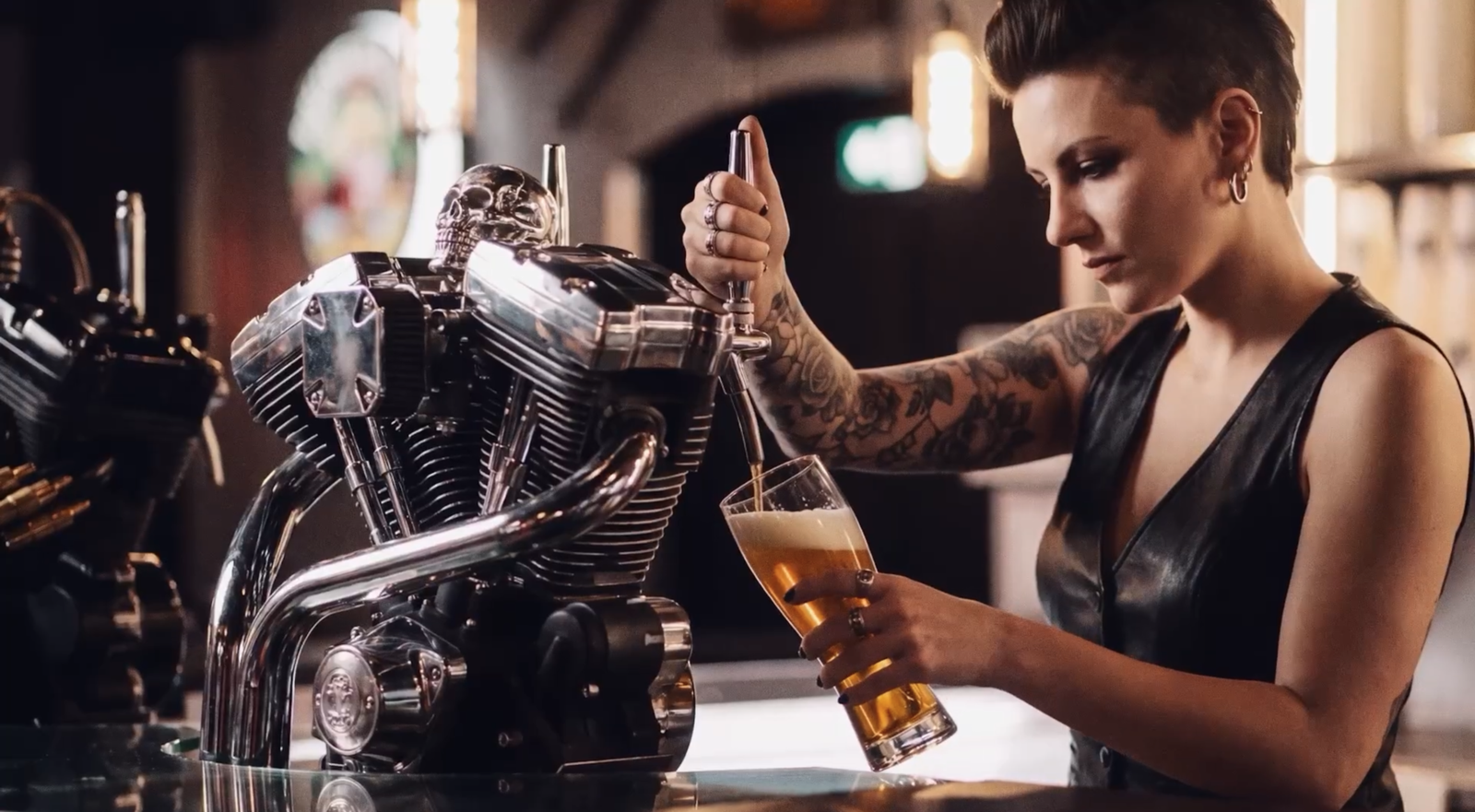
The result is a compact AI commercial where the focus is not an explanatory message but the feeling of the place. It combines a mythical story that could only belong to this bar with a location that guests will recognise on their first visit. Werewolves at the real counter, the Black Beauty in the real cigar room, the real emblem above the real door.
For the client that means a cinematic film for the website, social media and events, built on an idea that would not have been affordable conventionally, with a brand that holds up in every single frame.
06. Frequently Asked Questions
Can a complete commercial be produced without a conventional shoot?
Yes. On this project the entire image layer was generated, including creatures, animals and night scenes that would conventionally require a VFX budget. What it takes is a clear visual direction, clean references, controlled keyframes and professional post-production.
Can AI reproduce a real location accurately?
Yes, if you show it rather than describe it. We work from photographic references of the actual rooms, build each scene as an empty space first, and place figures into it only afterwards. Logos and brand elements are not generated at all; they are placed from the original files.
How do characters, creatures and motorcycles stay consistent across scenes?
Through fixed references for each layer, established before any video is generated, and through checks on every keyframe and every clip. The selected stills are only animated with image-to-video after approval. That holds consistency far better than direct text-to-video production.
What does an AI commercial cost compared with a conventional shoot?
Shoot days, actors, animals, creature effects, night lighting, locations and permits all fall away. The effort sits in references, concept, image development, generation and post. A film like this is produced for a fraction of the cost of a conventional production. We calculate the specific scope individually, based on runtime and number of scenes.
Which businesses is this kind of AI commercial suited to?
Brands and venues whose communication runs on atmosphere and imagery: hospitality, hotels, automotive, fashion, real estate, lifestyle. It is especially worthwhile when the idea calls for images that can’t be shot in reality, or only at great expense, while a real place still has to be shown accurately.
Does AI replace post-production?
No. Edit, timing, voice-over, music, sound design and grading remain decisive. On this film, post was also where the logo and brand details were finalised and where generated figures were bound to the real rooms.
Planning your own AI commercial?
We develop AI commercials from dramaturgy through references, storyboard and image development to finished post-production. Whether bar, hotel, dealership or brand: tell us briefly what you have in mind and we’ll show you which images become possible with a hybrid AI workflow.