

02 Challenge
Three requirements that contradicted each other.
A traditional live-action production would have been impossible within the available budget. A purely AI production would have undermined credibility. We needed a third way.
- Budget vs. ambitionA mid-sized company budget for a corporate film that should look like a big production. Casting, filming permits for occupied prefab housing blocks, courtyard scenes with children, drone shots. Impossible to pull off the traditional way.
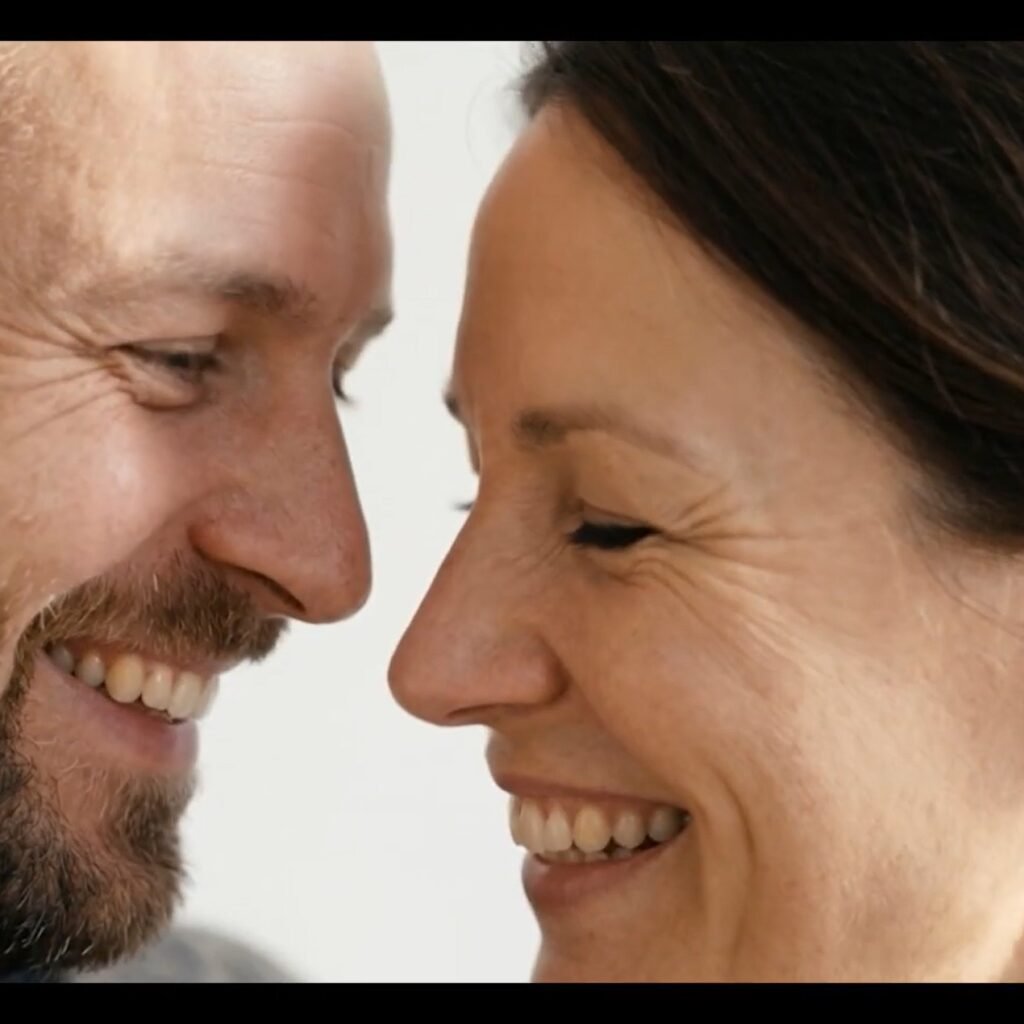
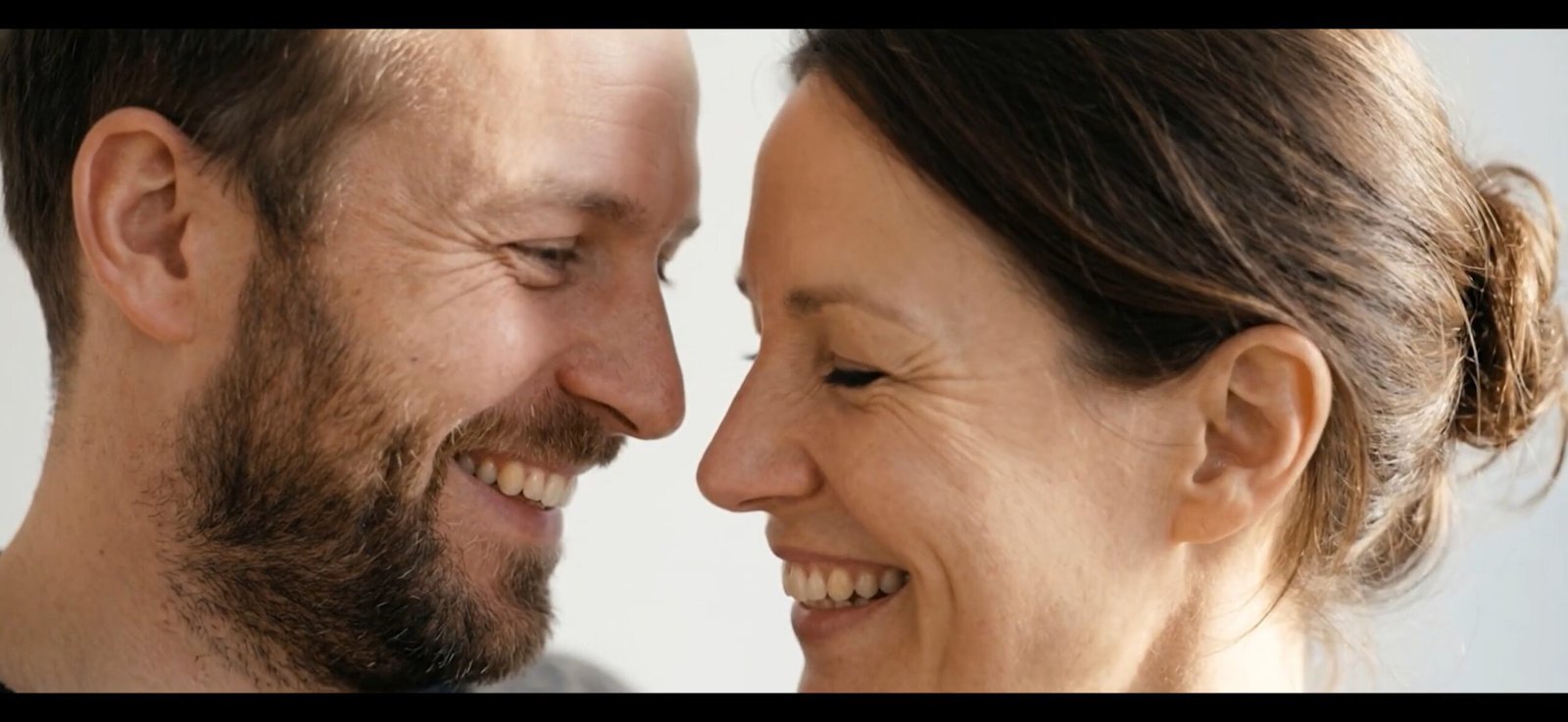
- Authenticity vs. AI aestheticsAI generators tend to produce smooth, generic faces. A tenant with real laugh lines, a prefab building with patina: that’s the hardest discipline in generative image production.
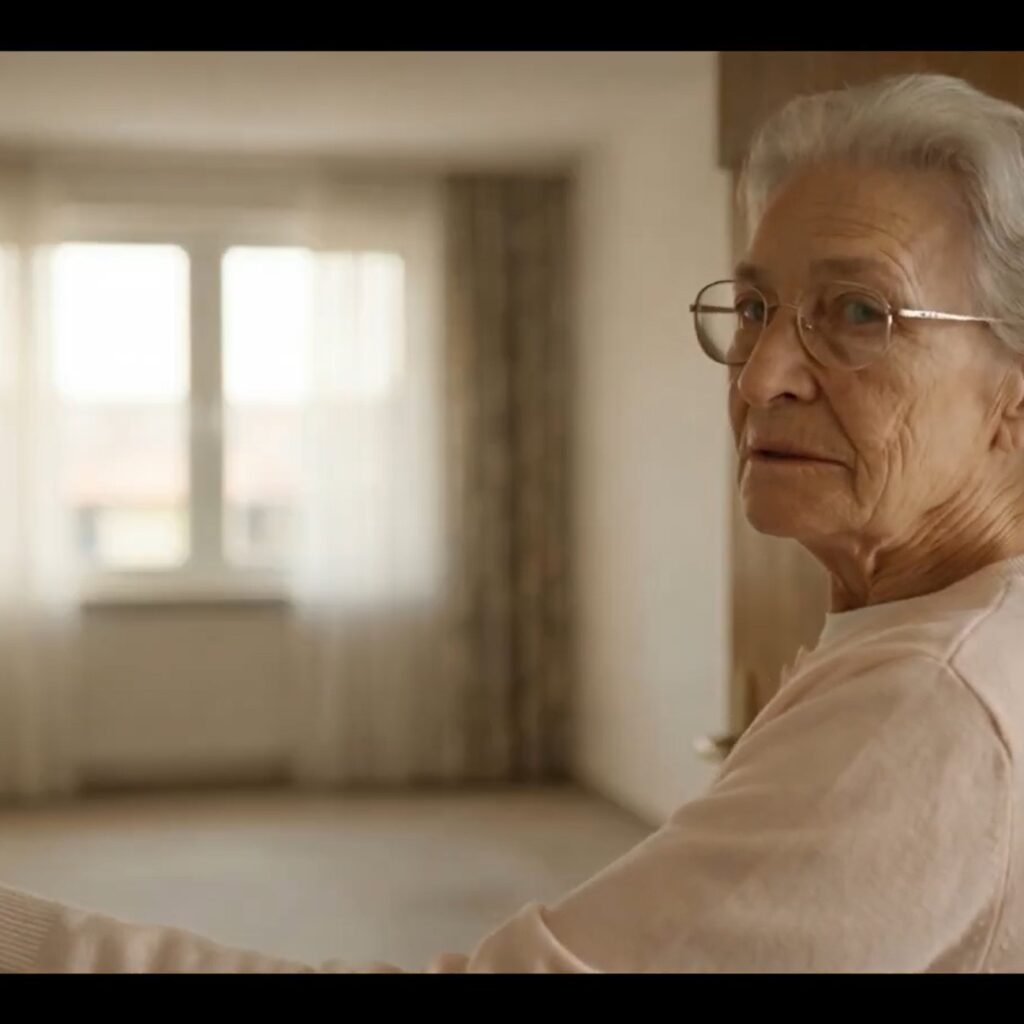
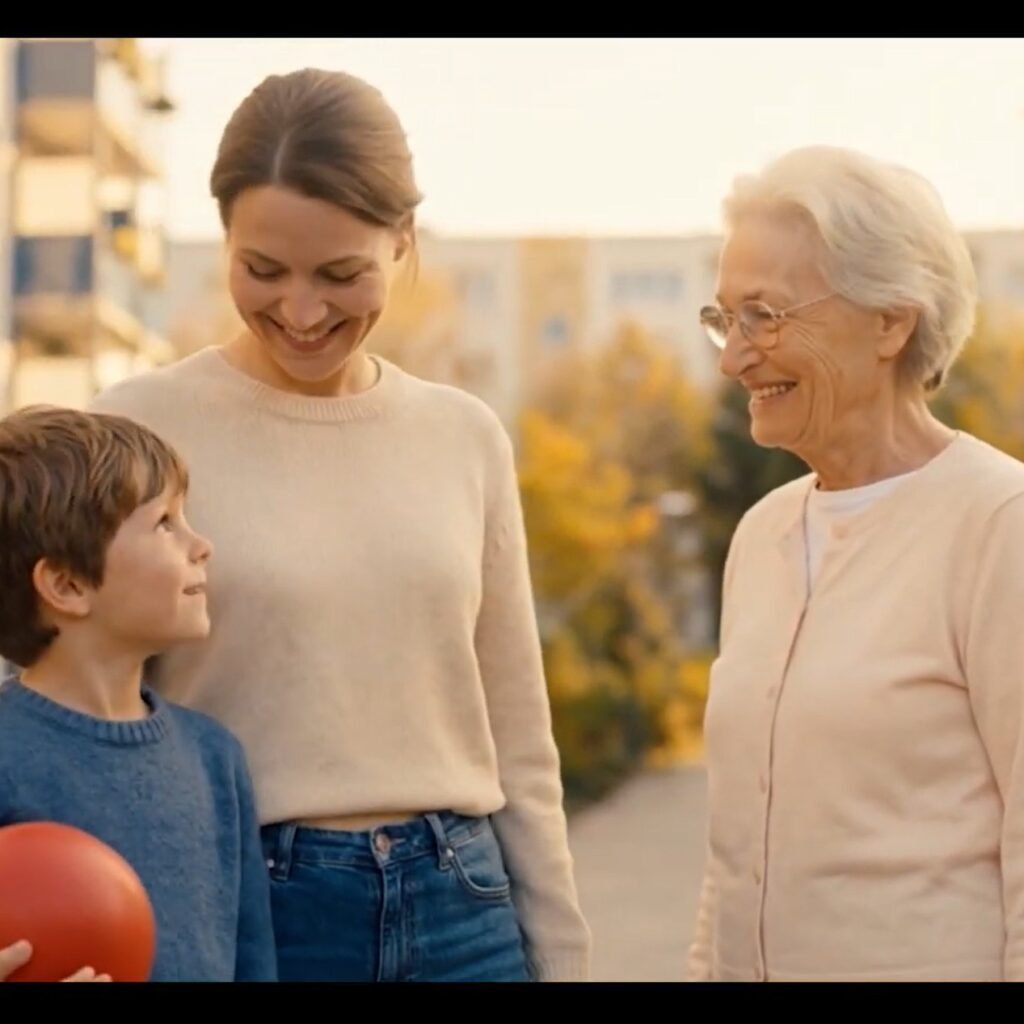
- Consistency across six scenesThe main character appears in twelve shots. Without a structured consistency workflow, the film falls apart into twelve different elderly women.
03 Approach
A hybrid workflow that uses each technique where it’s stronger.
Hybrid visual layer
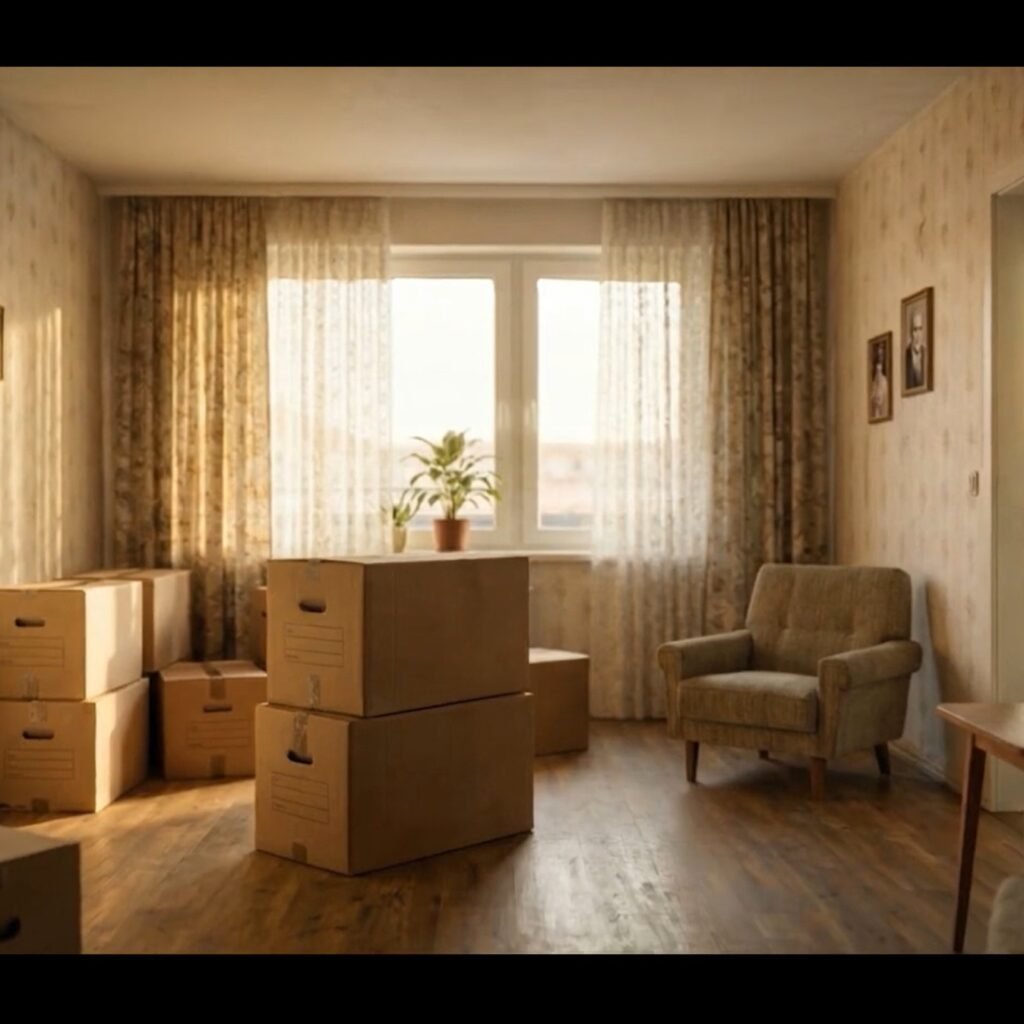
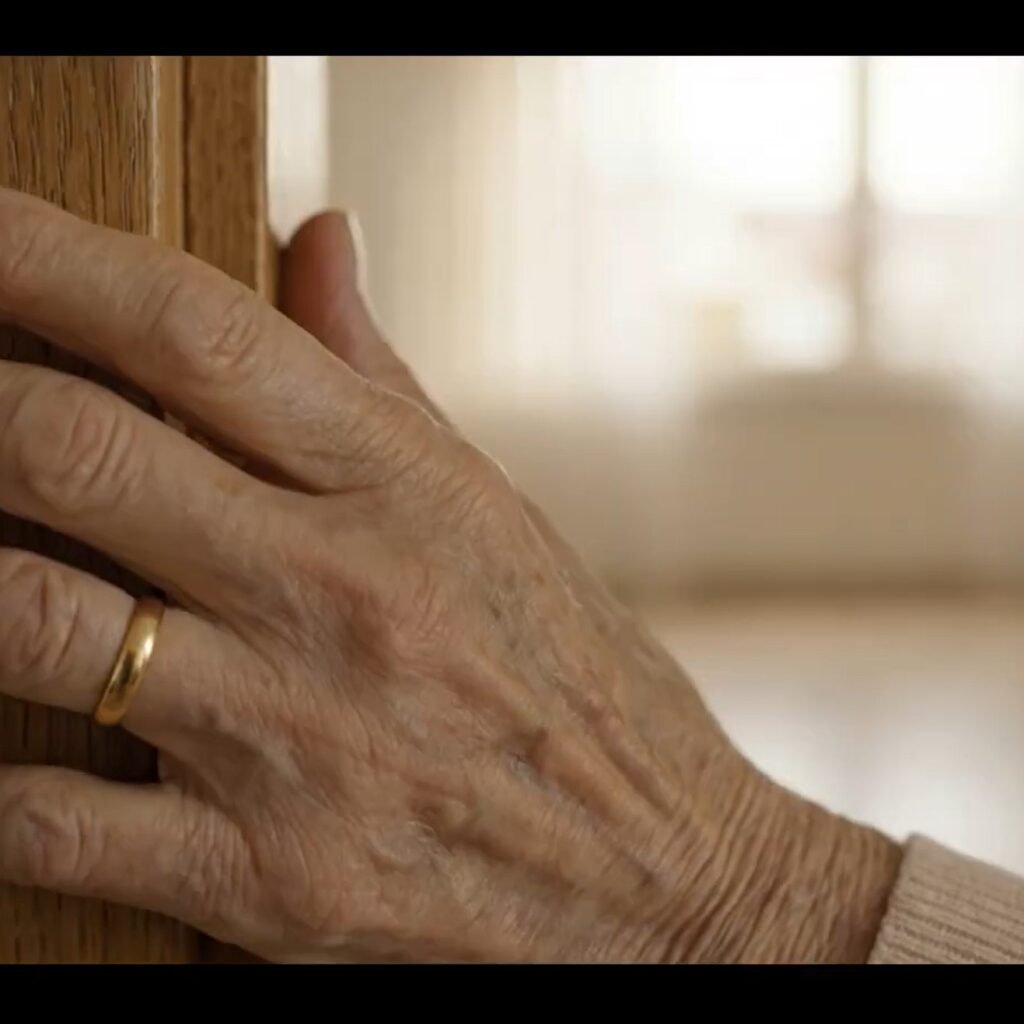
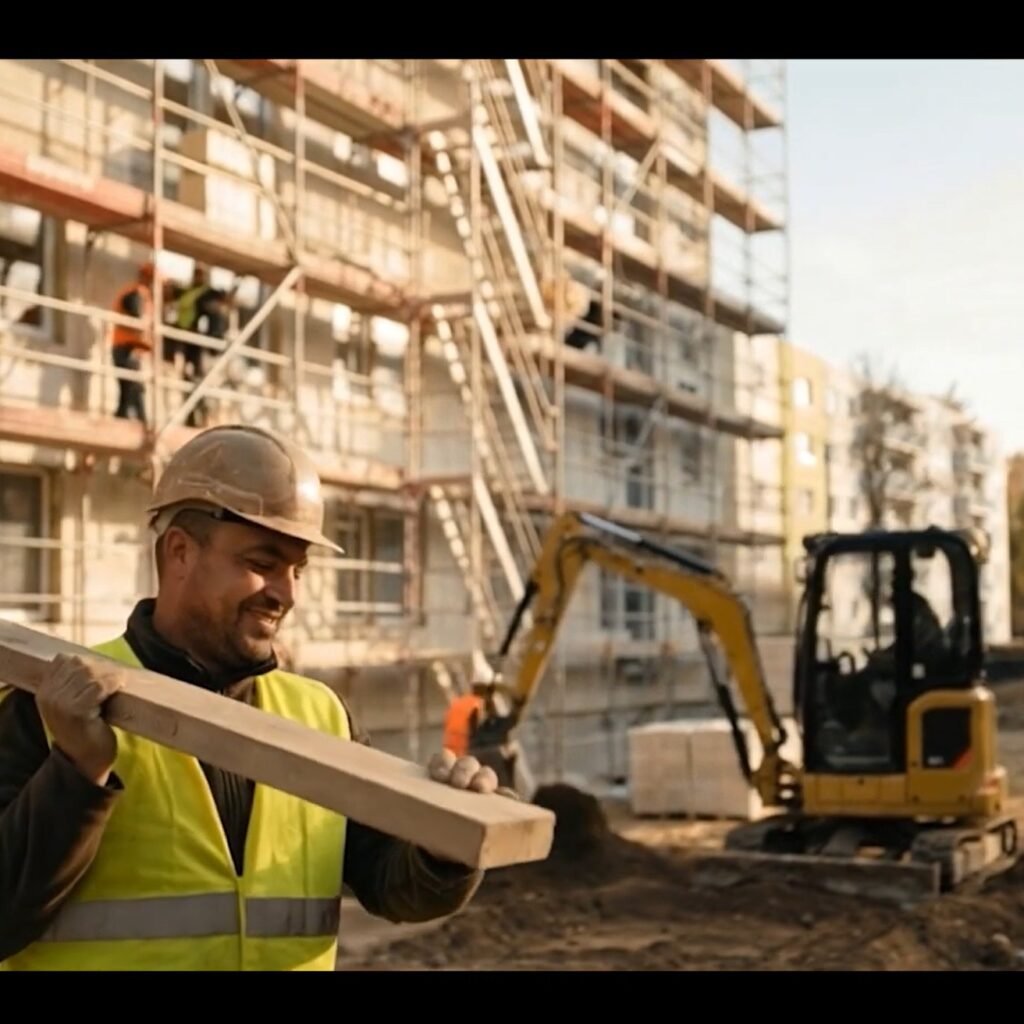
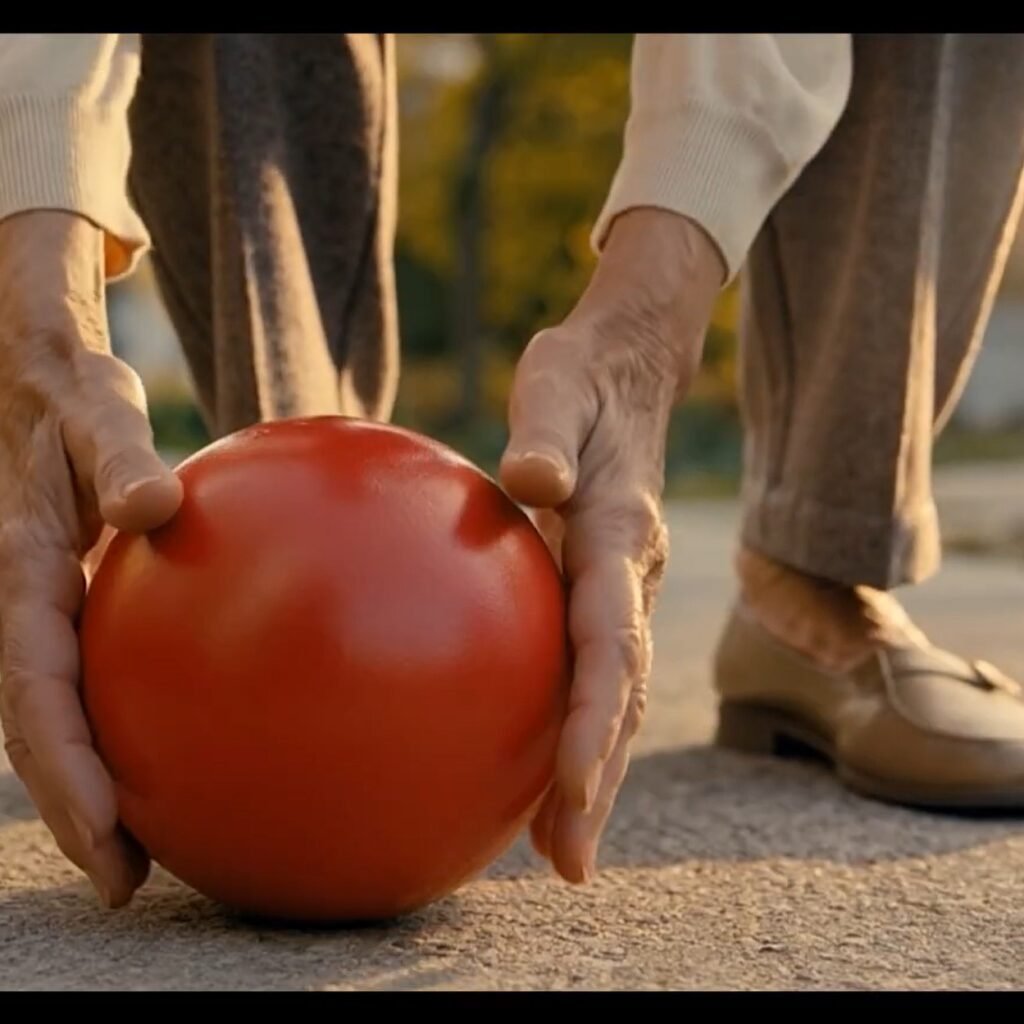
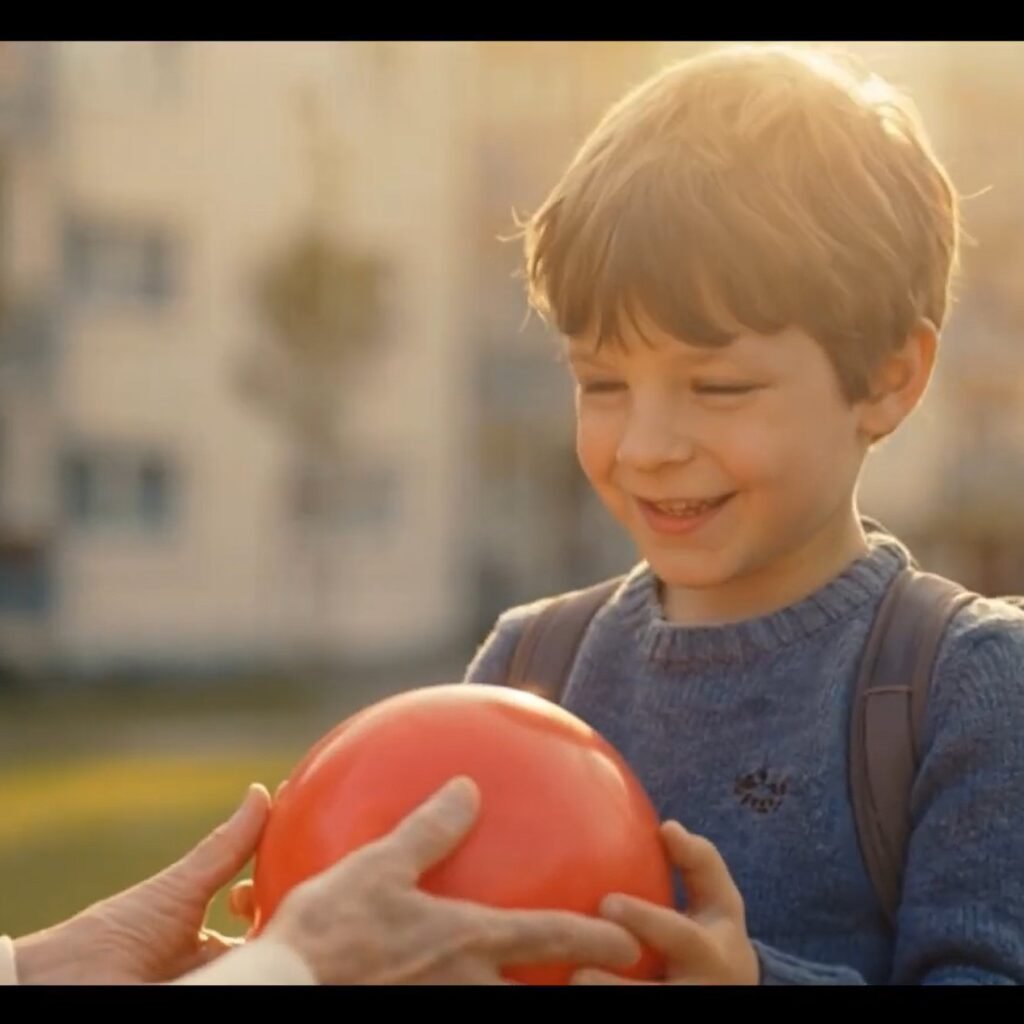
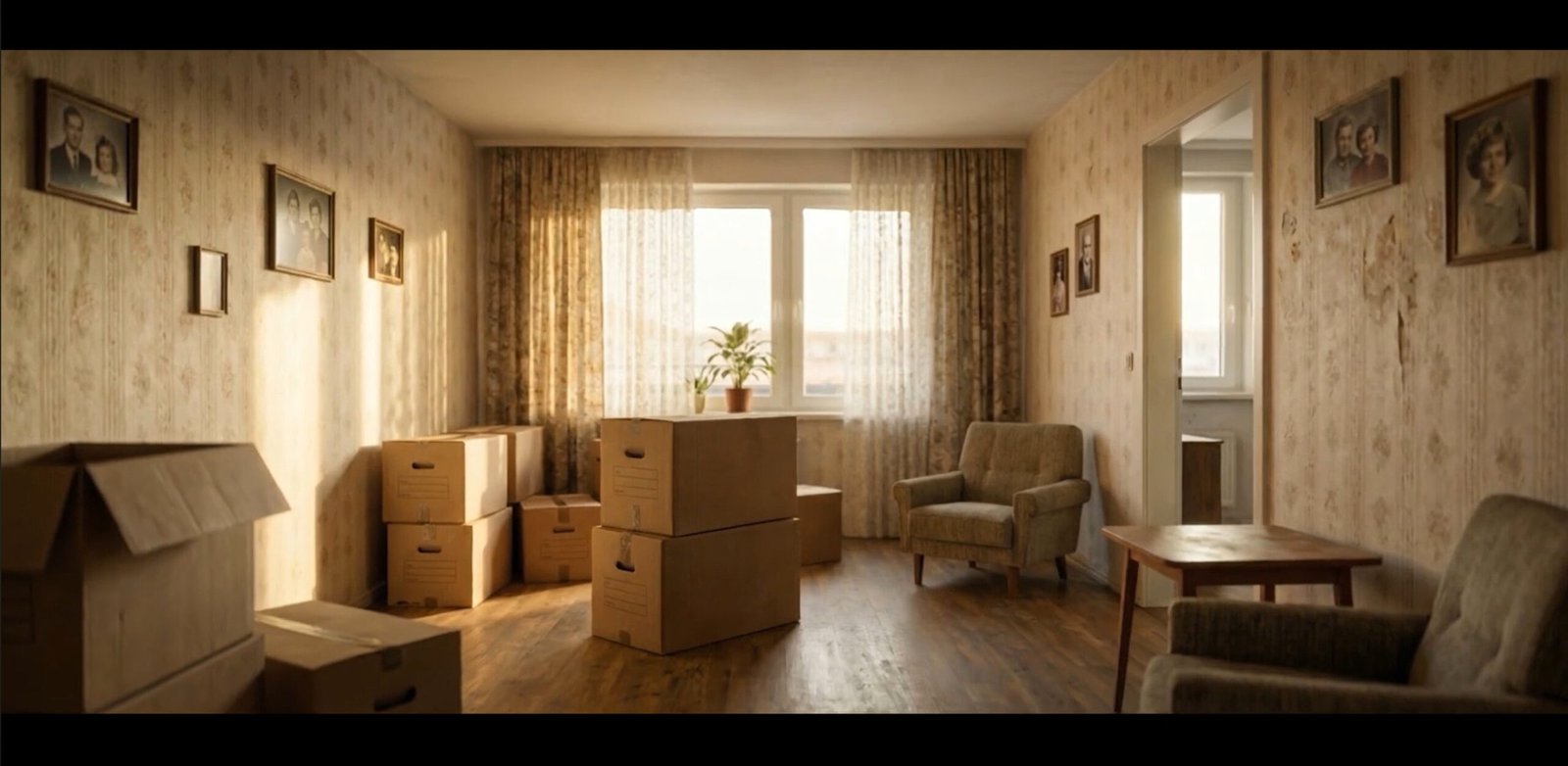
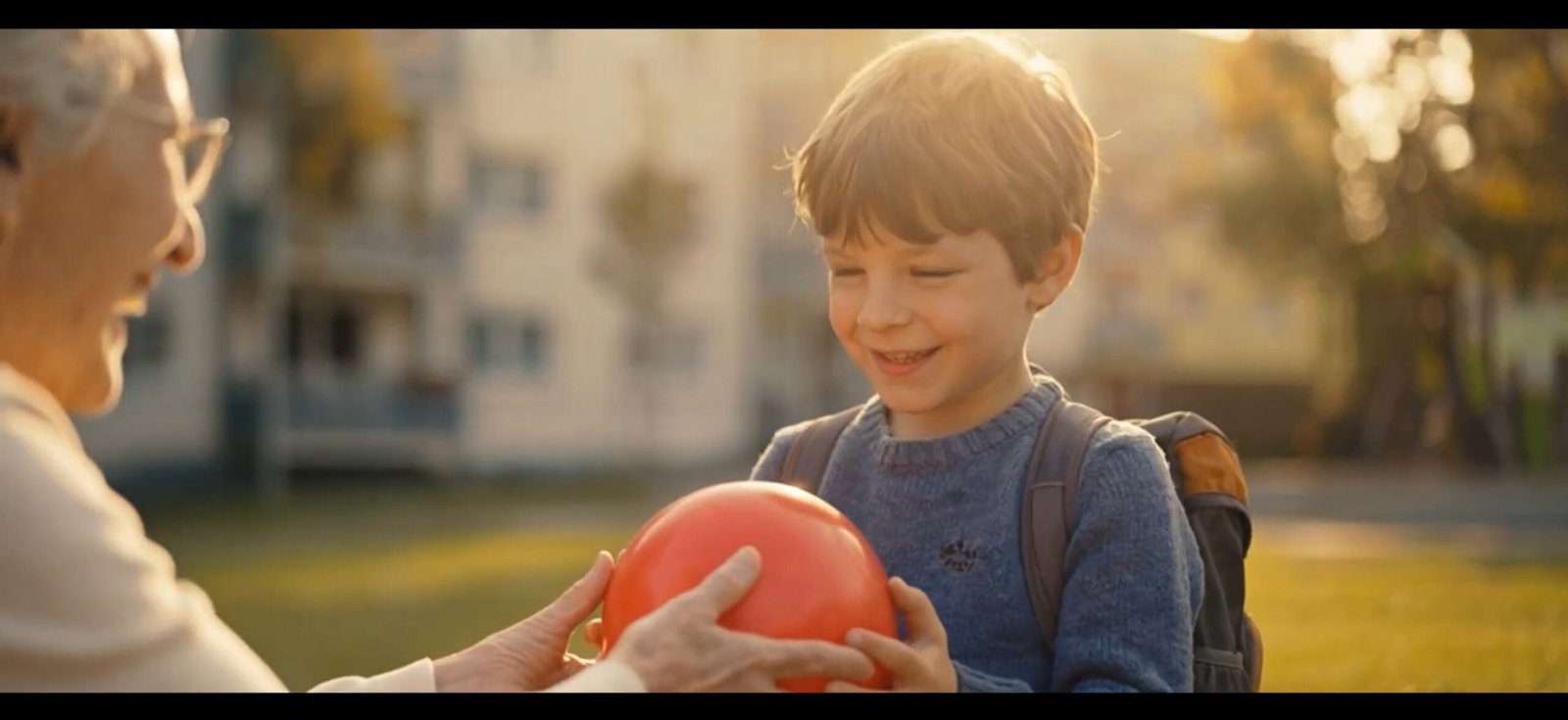
AI generation delivers the figurative and intimate scenes: the face in backlight, the hand on the door frame, the child with a ball in the courtyard. Real footage provides the documentary anchor: the actual WGS building with scaffolding, the real spring sky over Schwerin. Both layers are color-matched in post-production so the seam becomes invisible.
Character bible as consistency guarantee
Before the first generative run, we created character generation sheets for every figure: age, ethnicity, hair color, facial features, wardrobe per scene, accessories, emotional tonality. Each description was translated into a precisely worded reference prompt and used verbatim in every shot.
Image-to-video instead of text-to-video
Rather than generating motion directly from text, we first produced still images, reviewed and approved them internally. Only the approved stills were then animated through img2vid pipelines. This detour costs time but secures facial consistency at a level that text-to-video currently cannot achieve.
A visual language with intention
- Color palette: Earth tones, muted pastel greens, golden hour throughout. No cool, clinical colors.
- Camera work: Calm, observational. Close-ups on hands and gazes instead of fast cuts.
- Lighting: Natural window light indoors, golden hour outdoors. Hard-coded into the prompt.
- Editing: Slow transitions, parallel montage between the old and the modernized apartment. The film breathes.
04 Production
Four phases, 27 days, no delays.
Each phase ended with a defined deliverable. Feedback was integrated early, no bottleneck was pushed to the end, and the corporate film was ready to screen as planned during the Filmkunstfest MV at various cinemas in Schwerin.
05 Result
On time, on budget, on the big screen.
We delivered a 40-second main version in Full HD. The film will soon run across the WGS digital channels, at events, and in tenant communications around modernization projects.
What carries the film
- A clear, honest narrative instead of marketing pathos. Change is named as courage, not sold as progress.
- A fully consistent main character who works emotionally.
- A visual language that avoids the typical AI smoothness.
- A real anchor shot of the WGS building that grounds the film in actual Schwerin.
- A sound layer used sparingly and precisely, rather than drowning out the images.
06 Frequently Asked Questions
AI corporate film for housing companies: what you want to know.
What does an AI corporate film for a housing company cost?
How long does production take?
How does an AI-generated person stay consistent across multiple scenes?
Is AI film production suitable for sensitive topics like modernization and tenant communication?
How does an AI corporate film differ from traditional video production?
Which AI tools does That Works Media use?
Can we include real footage of our property portfolio?
Planning a corporate film for your housing company?
Talk to us about an AI corporate film for your housing company. We quote transparently, deliver in four weeks, and show you the workflow before the first frame.