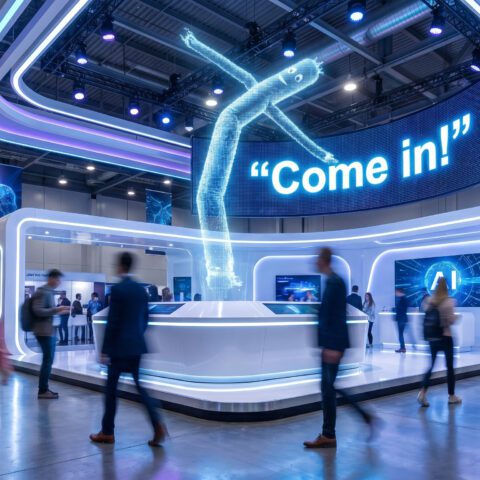


Picture this: your managing director personally welcomes every new employee, whether they’re starting in Berlin, Barcelona, or Bangalore. She explains products in 100 languages and is available 24 hours a day. That is exactly what AI avatars deliver today. At ThatWorksMedia, we see every day how companies use this technology to scale their communication without losing personality. Less noise. More signal.
In this guide, we show you how to build AI avatars, where they actually add value, and which legal rules you need to keep in mind in Germany.
What Is an AI Avatar, and What Can It Really Do?
An AI avatar is a digital version of a real or fictional person that can speak, gesture, and convey content on demand. The technology combines modern video generation with voice cloning and lip-sync. As a result, the videos produced are nearly indistinguishable from classic recordings. Unlike animated explainer videos, a photorealistic avatar carries messages far more personally: our brains respond to real human faces and absorb information delivered this way up to 60 percent more effectively. (Source: IXSOL)
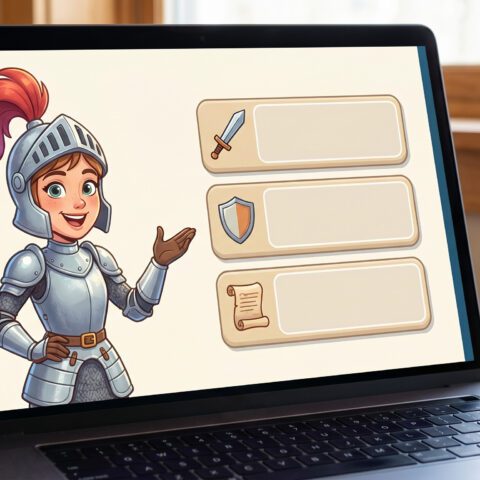
Broadly speaking, there are two families of avatars. On one hand, realistic avatars are created from footage of real people. They often serve as a digital brand face or virtual presenter. On the other hand, animated avatars in comic or cartoon style appear intentionally stylised, for example, to appeal to a younger audience or to present complex topics in a playful way. (Source: AI Training Institute)
Why AI Avatars Are Booming Right Now
The reasons for today’s breakthrough are tangible. First, the results are genuinely good: modern tools deliver photorealistic avatars with natural facial expressions, gestures, and accurate lip-sync, produced without a studio, without a camera crew, and without lengthy shoots. (Source: AIdentical)
On top of that comes the financial factor. US-based Whole Life Pet saved around 2,900 US dollars per video by using avatar production instead of traditional video production, a cost reduction of more than 80 percent. (Source: AIdentical) Other providers report similar numbers: companies generally save 50 to 70 percent of production costs because AI automates time-consuming tasks such as editing, post-production, and effects. (Source: IXSOL)
Finally, there is a scaling effect that no traditional production team can match. Once recorded, an avatar can be used indefinitely. It speaks in more than 100 languages without the need for new shoots, ideal for international campaigns, onboarding, and training. (Source: AIdentical)
How AI Avatars Are Made: Three Practical Approaches

Generally, there are three proven methods to create an AI avatar. Which is right for you depends on your demands regarding quality, time, and budget.
The simplest path runs through ready-made libraries: platforms such as Synthesia offer more than 240 pre-built AI avatars you can simply choose from. You write a script, pick an avatar, and get a finished video. (Source: Synthesia) This is the fastest option and works especially well for internal training or quick social media clips.
Things get more personal when you generate an avatar from a short self-recording. You record yourself with your smartphone or webcam, upload the footage, and then receive your digital twin. This method is ideal for business owners who have limited time to appear on camera but still want to act as authentic brand ambassadors. (Source: Creatify)
The most professional, and for us at ThatWorksMedia the most relevant, option is studio production. Here, a camera crew captures high-resolution footage that is then processed by AI models. The outcome: lifelike presentation with natural gestures and expressions, plus premium on-camera presence. (Source: Synthesia) Particularly for brands that want to establish a recognisable face, this route is the top choice.
The Most Important Business Use Cases
The range of applications is broad. In onboarding, avatars replace standardised welcome videos with a personal greeting from the CEO, even when the CEO is not physically present. This creates closeness while communicating company values. The business case is impressive: 45 percent of HR professionals already use AI-supported onboarding, and another 25 percent are planning to start. Companies with strong onboarding see 82 percent higher employee retention. (Source: AIdentical)
In marketing and sales, avatars create personalised video messages at scale. A virtual sales advisor can explain products or accompany a video proposal via email. Such avatar videos demonstrably generate higher engagement than pure text. (Source: AI Training Institute)
E-learning also benefits. Here, speaking avatars act as trainers or presenters. They walk new employees through onboarding modules or deliver training content, always patient, always consistent. An avatar teacher is available 24/7 and conveys information in a reliably uniform way. (Source: AI Training Institute)
Particularly exciting are interactive avatars. They are essentially chatbots with a face, combining natural language processing with a realistic digital appearance. They answer customer questions around the clock, book appointments, create tickets, or pull data from your CRM, in more than 100 languages. (Source: AIdentical) A telling example comes from UBS Switzerland, where the bank uses a digital twin of its chief economist for client advisory work. (Source: AIdentical)
Costs: What Companies Realistically Need to Budget
Price ranges vary widely because use cases differ in complexity. Entry-level tools like HeyGen start at around 24 US dollars per month, with a free plan for up to three videos monthly. (Source: kopfundstift.de)
In the business tier, platforms like Colossyan run at about 88 US dollars per month for unlimited video minutes and up to ten custom avatars per editor. Their starter tier begins at 27 US dollars monthly and covers 15 video minutes, access to more than 70 avatars, and three custom avatars. (Source: Synthesia)
For enterprise solutions with individual consulting, in-house studio shoots, and ongoing video production, project-based budgets usually apply, covering shoot day, editing, and tuning. Most productions are deliverable within a week, simple clips even within 24 hours. (Source: AIdentical)
Legal Framework: The EU AI Act and What You Need to Know from 2026
This is where a closer look really matters. Starting August 2026, a key requirement of the EU AI Act applies to all AI-generated content resembling real people: it must be clearly labelled. Phrases like “AI-generated image” or “AI-generated video” will become mandatory. According to current assessments, violations can result in fines of up to 15 million euros. (Source: kopfundstift.de)
On top of that, avatars depicting real people are subject to the established rules on personality and data protection. Companies must obtain explicit consent, not only for image but also for voice usage. Ethically established providers train their avatars only on real actors with their explicit consent and pay them per video generated with their likeness. (Source: Synthesia)
What Really Matters When Choosing a Provider
Anyone looking to create an avatar faces a confusing provider landscape. From our perspective, five points deserve particular attention. First: how photorealistic is the result really? Many tools look good in preview but fall short on lip-sync, with some providers, syncing simply seems inaccurate. (Source: Synthesia)
Second: how many languages are supported, and with what quality? The range spans 80 to more than 160 languages, including accurate accent rendering. (Source: Synthesia)
Third: which server locations and GDPR guarantees does the provider offer? Especially in the German market, production on German, or at least European, servers is a key criterion. (Source: AIdentical)
Fourth comes the question of interactivity. Should your videos only read scripts, or should they answer questions in real time, book appointments, and connect to your CRM? For service and sales use cases, this is a crucial lever. (Source: AIdentical)
Fifth, and often underestimated: what is the data situation for your own content? Some providers store photos and video material permanently, which raises privacy concerns. (Source: kopfundstift.de)
A Real-World Example from the Mid-Market
An example from healthcare and education illustrates the breadth of use. Healthcare providers are deploying AI avatars for patient education, appointment management, and telemedicine support, the FDA has already cleared several AI-based virtual interaction platforms. (Source: AIdentical)
In the financial sector, avatars advise on products, warn about fraud, and support financial education. (Source: AIdentical) What these use cases share is that they make singular expertise, that of a chief economist, trainer, or product specialist, endlessly available through a digital twin.
The Flip Side: What to Examine Critically

Impressive as the technology is, there are limits you should be aware of. First, there are the well-known quality issues: sometimes unnatural results, occasionally six fingers on a hand or distorted ears. (Source: kopfundstift.de) Premium tools fix this reliably, but budget solutions still don’t always succeed.
Then there are the ethical questions. Deepfake risks, questions of authenticity, and the danger of misuse are real issues that you should factor into your content strategy. (Source: kopfundstift.de) Our recommendation: work with clear labelling, even before it becomes legally required. That builds trust with both customers and employees.
Conclusion: AI Avatars Are Here to Stay
AI avatars are no longer a gimmick but a serious tool for corporate communication. They shorten production times, reduce costs, and unlock international reach that used to be available only to large corporations. At the same time, they require clear legal guardrails and honest communication with your audience.
At ThatWorksMedia, we help companies choose the right production strategy, from avatar add-ons in live-action films to complete e-learning libraries. Less noise. More signal.
FAQ: Frequently Asked Questions About AI Avatars
How long does it take to create your own AI avatar? Simple clips with pre-built avatars can often be delivered within 24 hours. A full studio production including shoot day, editing, and tuning usually takes about a week. Series productions in multiple languages are executed on binding timelines. (Source: AIdentical)
In which languages can an AI avatar speak? Leading platforms support more than 100 to 160 languages with accurate lip-sync. This makes avatars ideal for international campaigns, multilingual onboarding, and global sales. (Source: AIdentical, Synthesia)
What does a professional AI avatar cost? The range is wide. Entry-level tools start at 24 to 27 US dollars per month, business plans run at about 88 US dollars monthly, and individual enterprise productions are usually quoted per project. (Source: kopfundstift.de, Synthesia)
Do I have to legally label AI avatars? Yes. Starting August 2026, the EU AI Act requires that all AI-generated content resembling real people must be clearly labelled. Violations can cost up to 15 million euros. (Source: kopfundstift.de)
How realistic do modern AI avatars look? Modern, photorealistic avatars look like real people, with natural facial expressions, gestures, and perfect lip-sync. High-resolution rendering and precise voice cloning create an impression that is hard to distinguish from actual video recordings. (Source: AIdentical)
Are AI avatars also suitable for small businesses? Yes, smaller companies in particular benefit. They save significant production costs of 50 to 70 percent and can scale their video communication without building their own studio. (Source: IXSOL)
What is the difference between a realistic and an animated avatar? Realistic avatars look like real people and suit business communication, for example as virtual presenters. Animated avatars in comic or cartoon style are intentionally stylised and work especially well for explainer videos or younger audiences. (Source: AI Training Institute)
Can avatars also respond interactively? Yes. Modern systems combine AI avatars with language processing. The result is chatbots with a face that answer questions in real time, book appointments, or retrieve data from your CRM. (Source: AIdentical)
ThatWorksMedia is a Berlin-based AI video production and content agency. We produce explainer videos, e-learning content, AI-generated video, and social media content for B2B clients. Less noise. More signal.