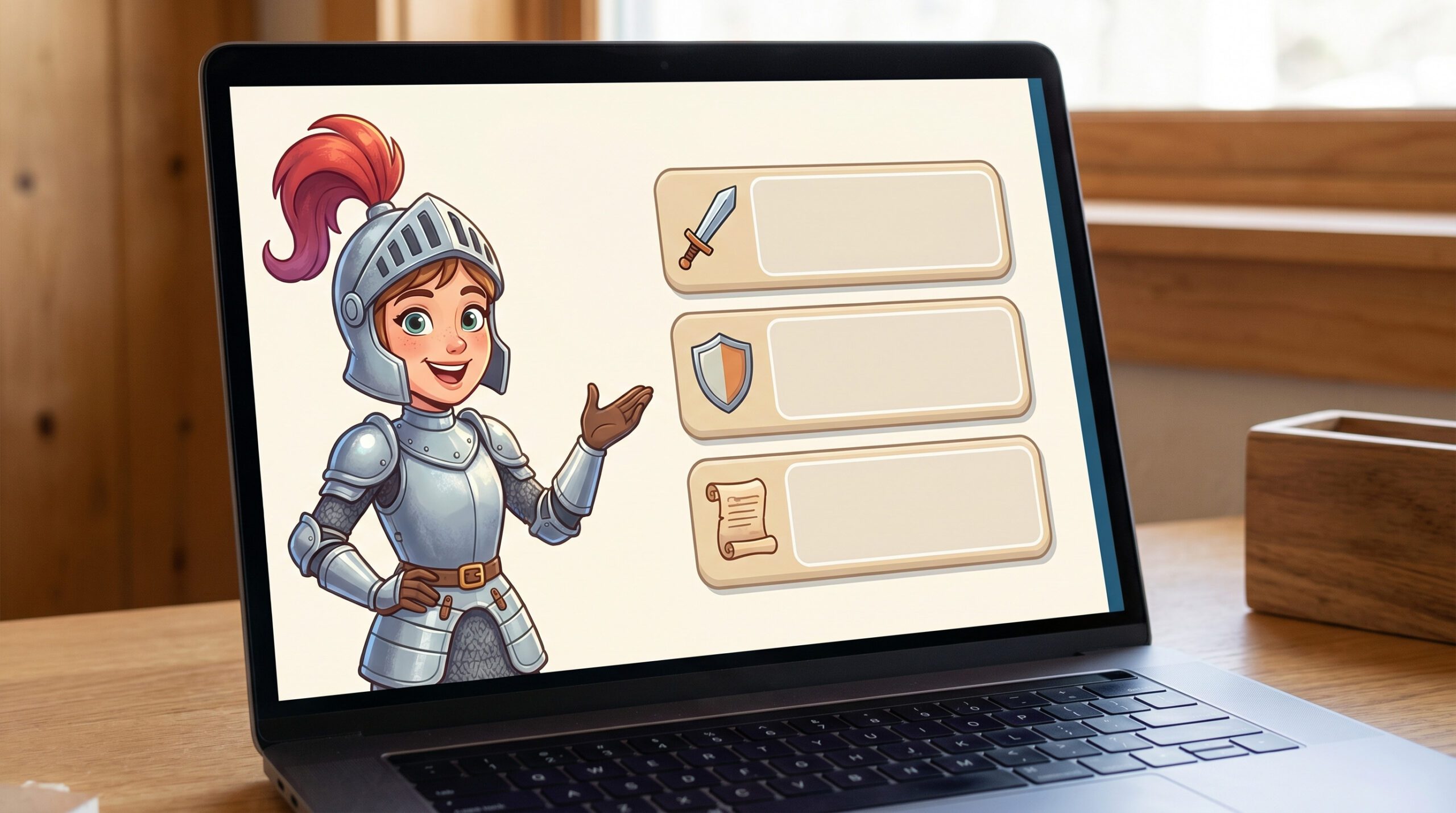
Every training programme has a problem everyone knows: people forget. They forget facts, regulations, and processes often within just a few days after the session. But they never forget a good story. This difference is exactly what makes digital storytelling perhaps the most important tool of modern e-learning concepts. Because according to the psychologist Jerome Bruner, content from stories is remembered 22 times better than plain facts. (Source: mynd)
At ThatWorksMedia, we produce e-learning formats that leverage exactly this effect. In this post, we show you how digital storytelling works, which building blocks make a learning story effective, and how you can sustainably improve your own learning formats.
Why Stories Stick in the Brain While Facts Evaporate
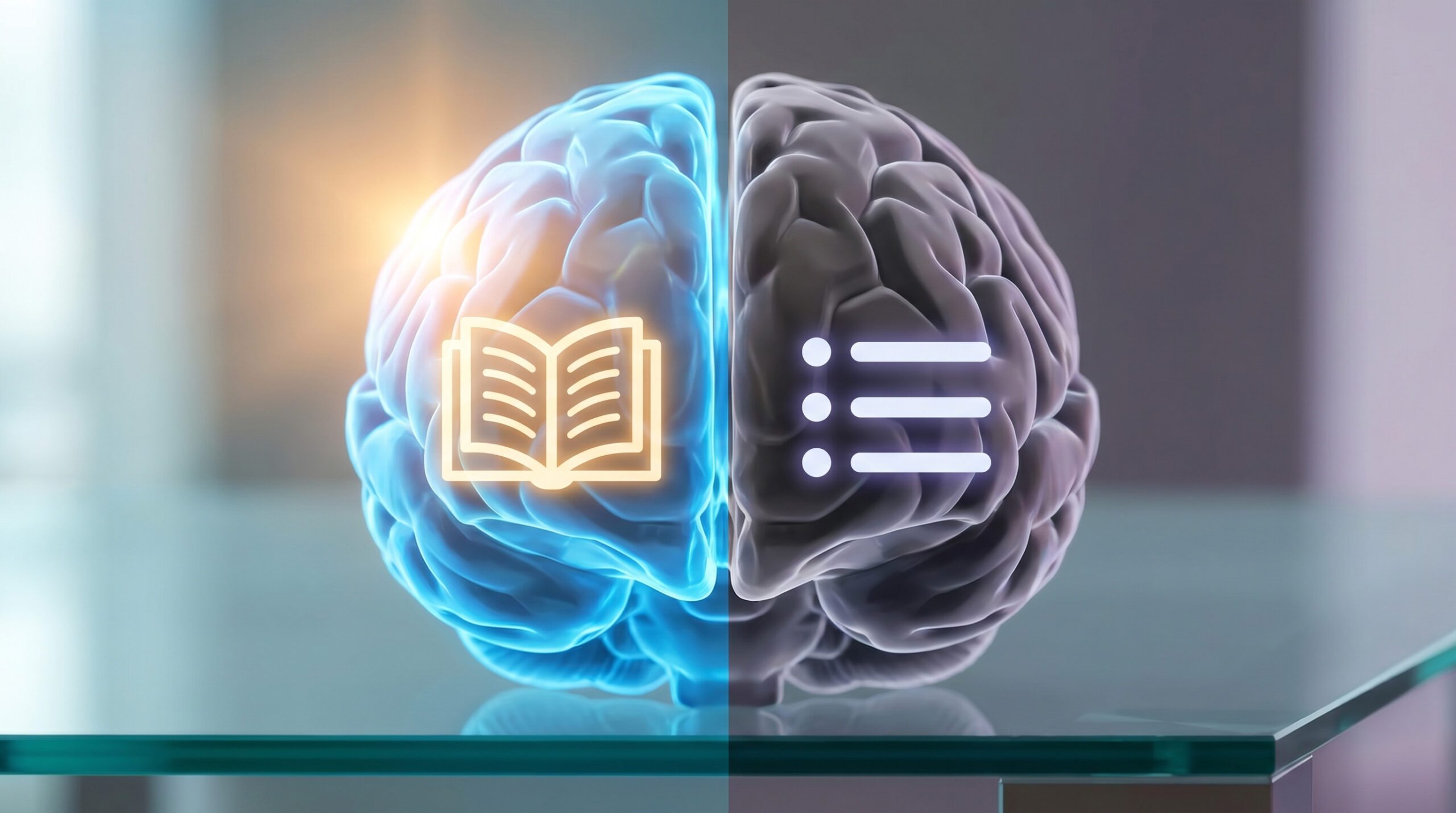
The reason storytelling works so powerfully lies in our brain biology. The brain loves stories because they trigger emotion. The responsible region, the amygdala, evaluates emotional stimuli and is directly connected to the hippocampus, which plays a central role in long-term memory formation. If you want to anchor new knowledge in the hippocampus, you first have to convince the amygdala. And nothing does that better than a new, compelling story. (Source: chemmedia AG)
This mechanism is thousands of years old: even in the Stone Age, people told stories to pass on knowledge and strengthen communities. (Source: thinkmedia) Storytelling therefore creates an emotional connection between narrator and audience. Through stories, complex topics become accessible and important messages are delivered sustainably. (Source: thinkmedia)
For e-learning, this means: anyone who embeds technical content in a narrative frame not only increases attention but also ensures that what has been learned can actually be retrieved at work.
What Digital Storytelling Actually Means
The term is often used loosely, so a precise definition is useful. Digital storytelling is the art of telling stories through digital media in order to reach a broad audience. (Source: thinkmedia) It employs blogs, videos, podcasts, social media posts, and interactive websites that enable multimedia narration.
In the e-learning context, this means: complex learning content is embedded in a compelling narrative that attracts and holds learners’ attention. Knowledge is linked to an engaging story, making the learning process not only more entertaining but also more lasting, because stories are easier to remember than plain facts. (Source: Cegos-Integrata)
It is important to understand: the underlying principles do not change simply because the medium is digital. In the case of digital storytelling formats, the basic approach remains the same, the digital medium is merely the carrier. (Source: FernUni Hagen / ZLI)
The Four Building Blocks of an Effective Learning Story
A good e-learning story follows proven patterns. From the specialist literature, four central building blocks emerge that you should keep in mind for every project.
First, a clear and relevant plot. A good story needs a coherent structure with a clear starting point, a challenge, and a resolution. This helps learners better understand and internalise the content. (Source: Cegos-Integrata)
Second, a connection to lived reality. The story should align with the experiences of the target group. By integrating real challenges and practical scenarios, the content becomes more relevant and applicable. (Source: Cegos-Integrata) In other words: the fictional figure should face the exact problem learners have to handle in their daily work.
Third, emotional connection. Emotions play a central role in information processing. (Source: Cegos-Integrata) A story that evokes tension, humour, or empathy sticks far longer than a neutral list of facts.
Fourth, relatable characters. An exciting story lives through its main figures. Storytelling without heroes and antagonists does not work, you would be back to dry facts. Come up with protagonists, sympathetic main characters with whom the participants in your courses can identify. (Source: WebCampus)
The Hero’s Journey: A Structure That Has Worked for Millennia
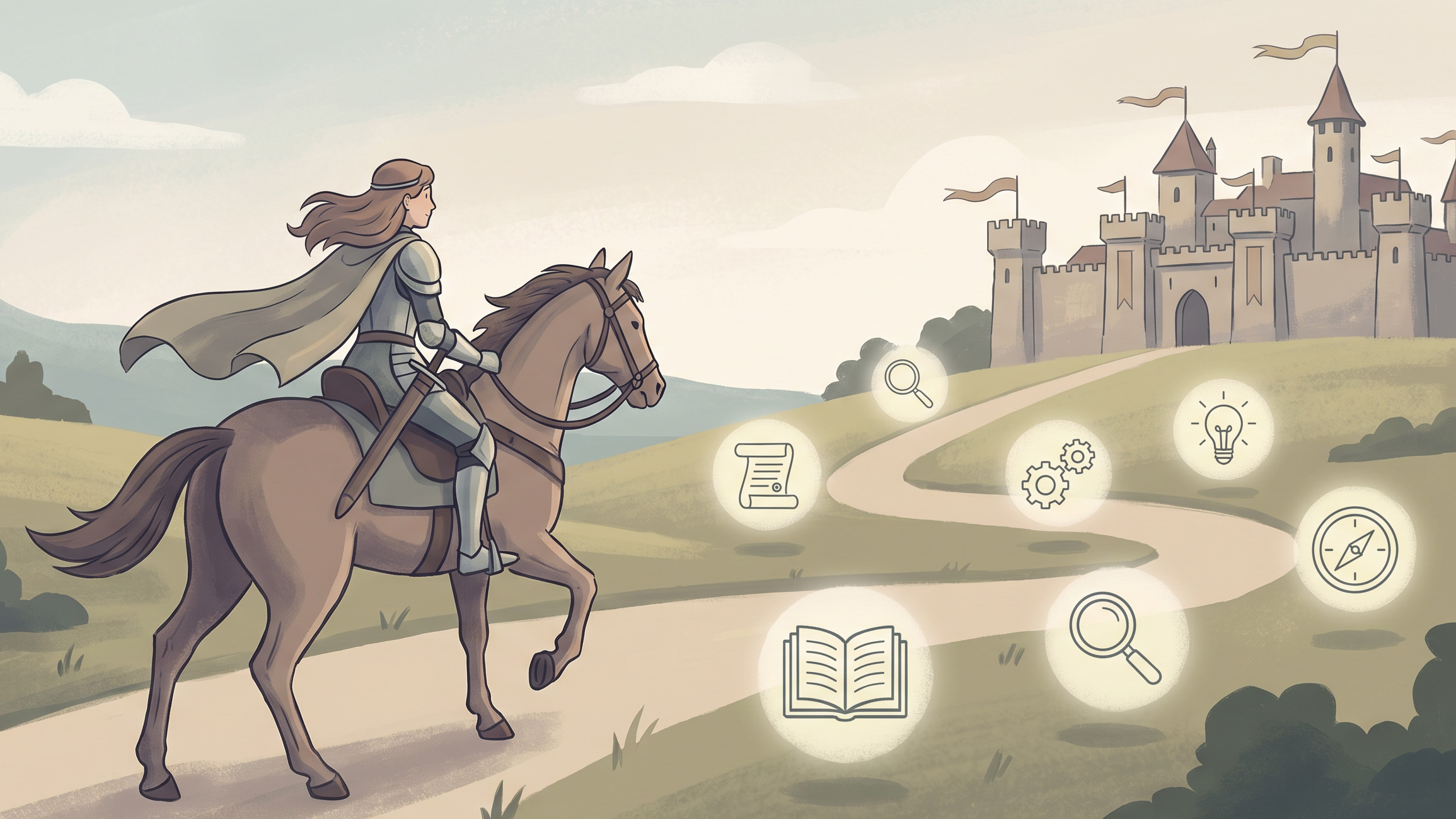
Anyone wanting to use storytelling systematically will find a proven template in the concept of the hero’s journey. This structure has its roots in Greek mythology and is still used today in film, literature, and successful e-learning. (Source: mynd)
The hero’s journey begins with a problem the character must face. Then they meet a mentor or confidant who offers wisdom and advice and prepares them for the journey. Next, the character steps into an unfamiliar world and leaves the familiar one behind. On their journey, they encounter tests, foes, and allies who challenge and strengthen them. They go through an inner evolution, understand themselves better, and ultimately reach a revelation or insight that drives them forward. (Source: mynd)
In e-learning, this means: learners themselves become the heroes or accompany the main character through challenges that match the learning content. The closer you follow the proven five-act structure, the greater and more sustained the learning success. (Source: chemmedia AG)
A Practical Example: How Festo Didactic Uses Storytelling to Bring Standards to Life
A concrete mid-market example illustrates the effect: Festo Didactic developed a learning programme on electrical safety measures. The subject involves dry standards that every electrician and anyone working with electricity must know. Instead of presenting these standards as a list of paragraphs, the programme centres around a person switching on an iron at home. Through this everyday example, the dangers of electricity become tangible, along with the measures to take in the event of a fault. (Source: CHECK.point eLearning)
The insight from such projects is clear: stories are simply easier to remember. They make behaviours more transparent and integrate action orientation. For certain subjects, especially in technical fields, the approach is ideal. (Source: CHECK.point eLearning)
Still, one should be honest: weaving a story around a learning programme is more elaborate than a purely problem-oriented or subject-systematic approach. Graphics and animations have to be created and integrated to make the story believable. Depending on scope and topic, such a production can be up to 30 percent more expensive, but the learning success justifies the investment. (Source: CHECK.point eLearning)
Modern Formats: From Gamification to AI-Powered Learning Stories
Digital storytelling today shows its strength in several modern formats. Particularly effective are gamified e-learnings in which participants guide the story’s hero through an environment or answer questions to reach the next level. Such formats deliver strong learning effects because users not only engage with the questions but are also motivated to achieve the best possible results. They identify with the characters and retain the content far better. (Source: WebCampus)
Another format is interactive simulations. Here, for example, a customer service call is simulated in which different response options have different effects on the course of the conversation. Employees learn standardised phrases that benefit the company while giving them a sense of confidence in their own roles. (Source: skillbest)
Modern e-learnings also integrate AI tools. These assist at every step, from ideation to structuring to text optimisation and visual design. AI is not a replacement but an efficient support that helps create messages that land and stories that stick. (Source: Deutsche Presseakademie)
The Impact: More Than Just Better Retention
Digital storytelling works on several levels simultaneously. For one, the dramatic structure links abstract facts and concepts and guides learners through the material like a red thread. Interactive and narrative elements motivate active engagement and deepen the connection to the content. (Source: media-lab)
Furthermore, storytelling promotes critical thinking. It encourages learners to question assumptions and set knowledge into a larger context. Academic performance can also improve with digital storytelling. It likewise stimulates creativity when learners explore and present content in playful ways. Finally, dealing with narrative and multimedia content strengthens media literacy, a vital skill in our increasingly digital world. (Source: media-lab)
Importantly, though: despite all the benefits, storytelling is not a guaranteed success. Not every story automatically improves the learning process. (Source: media-lab) The right execution matters.
Common Mistakes, and How to Avoid Them
From experience, several pitfalls can be identified that you should be aware of. A first mistake is a lack of audience fit. In e-learning, the target group is usually clearly defined, management attends leadership seminars, sales teams learn new approaches. (Source: WebCampus) If the audience and the story do not match, you may end up with amusing videos but little actual learning. (Source: mynd) A virtual runaway puppy may touch our emotions, but for a complex leadership training, it is the wrong choice. (Source: chemmedia AG)
A second common mistake is a missing link to the learning goal. Every narrative decision, every character, every scenario, every twist, should pay into the learning objective. Storytelling is a tool, not an end in itself.
A third mistake: weak protagonists. Even in e-learning, a story needs a hero or heroine and a meaningful structure. (Source: mynd) Flat characters who just recite information do not work.
How to Start with Digital Storytelling in Your Own Company
For getting started, we recommend a stepwise approach. First, an honest audience analysis pays off: what prior knowledge do learners bring, which age group, which digital skills, which daily challenges? (Source: mynd)
From there, a suitable story can be developed using the hero’s journey or a similar narrative framework. Equally important is selecting the right media: a short audio clip or video sequence pulls viewers more strongly into the scene, for instance through music that speaks to emotion. (Source: WebCampus)
Finally: iterate and test. Especially in digital learning, it is easy to start with small pilots, gather feedback, and refine content. Good storytelling programmes rarely come fully formed off the drawing board, they are shaped together with the learners.
Conclusion: Storytelling Is Not a Nice-to-Have, It’s a Foundation
Modern e-learning formats can only unfold their full impact if they do more than make PowerPoint slides available digitally. Digital storytelling is arguably the most powerful tool available. It combines age-old narrative techniques with new media, activates emotion, and ensures that knowledge is not only absorbed but also retrievable.
At ThatWorksMedia, we concept and produce e-learning formats that deliver on exactly this promise. Less noise. More signal.
FAQ: Frequently Asked Questions About Digital Storytelling in E-Learning
What exactly is digital storytelling? Digital storytelling is the art of telling stories through digital media such as blogs, videos, podcasts, or interactive websites. In e-learning, this embeds complex content in an engaging narrative. (Source: thinkmedia, Cegos-Integrata)
How much better do learners remember content through storytelling? According to the psychologist Jerome Bruner, content from stories is remembered up to 22 times better than plain facts. (Source: mynd)
Why does storytelling work so well in the brain? The amygdala evaluates emotional stimuli and is directly connected to the hippocampus, which is responsible for long-term memory formation. To anchor knowledge there, the amygdala must first be activated by an engaging story. (Source: chemmedia AG)
Which building blocks does an effective learning story need? Four building blocks are central: a clear and relevant plot, a connection to the learners’ lived reality, emotional connection, and relatable characters. (Source: Cegos-Integrata, WebCampus)
What is the hero’s journey and why does it work? The hero’s journey is a narrative structure from Greek mythology that is still used in films and successful e-learning today. The character encounters a problem, meets a mentor, goes through trials, and ultimately reaches a realisation. The closer an e-learning follows this template, the greater the learning success. (Source: mynd, chemmedia AG)
Is storytelling more expensive than classic e-learning? Yes, usually. A storytelling-based production can be up to 30 percent more expensive because graphics, animations, and multimedia elements are required. The improved learning success, however, typically justifies the investment. (Source: CHECK.point eLearning)
Which mistakes should I avoid? Lack of audience fit, mismatched stories, flat protagonists, and narrative decisions with no link to the learning goal. Not every story automatically improves the learning process. (Source: mynd, media-lab)
How can AI support digital storytelling? AI tools help with ideation, structuring, drafting, and visual content. They are not a replacement but an efficient support in developing learning stories. (Source: Deutsche Presseakademie)
Which topics suit storytelling particularly well? Storytelling is especially effective for complex, dry, or technical subjects, such as standards, safety regulations, or regulated processes. A classic example: electrical safety measures brought to life through an everyday story. (Source: CHECK.point eLearning)
How do I start with digital storytelling in my own company? Begin with an honest audience analysis, choose a suitable narrative structure, integrate multimedia elements such as audio or video, and iterate with small pilots before scaling. (Source: mynd, WebCampus)
ThatWorksMedia is a Berlin-based AI video production and content agency. We concept and produce e-learning content, explainer videos, AI-generated video, and social media content for B2B clients. Less noise. More signal.