
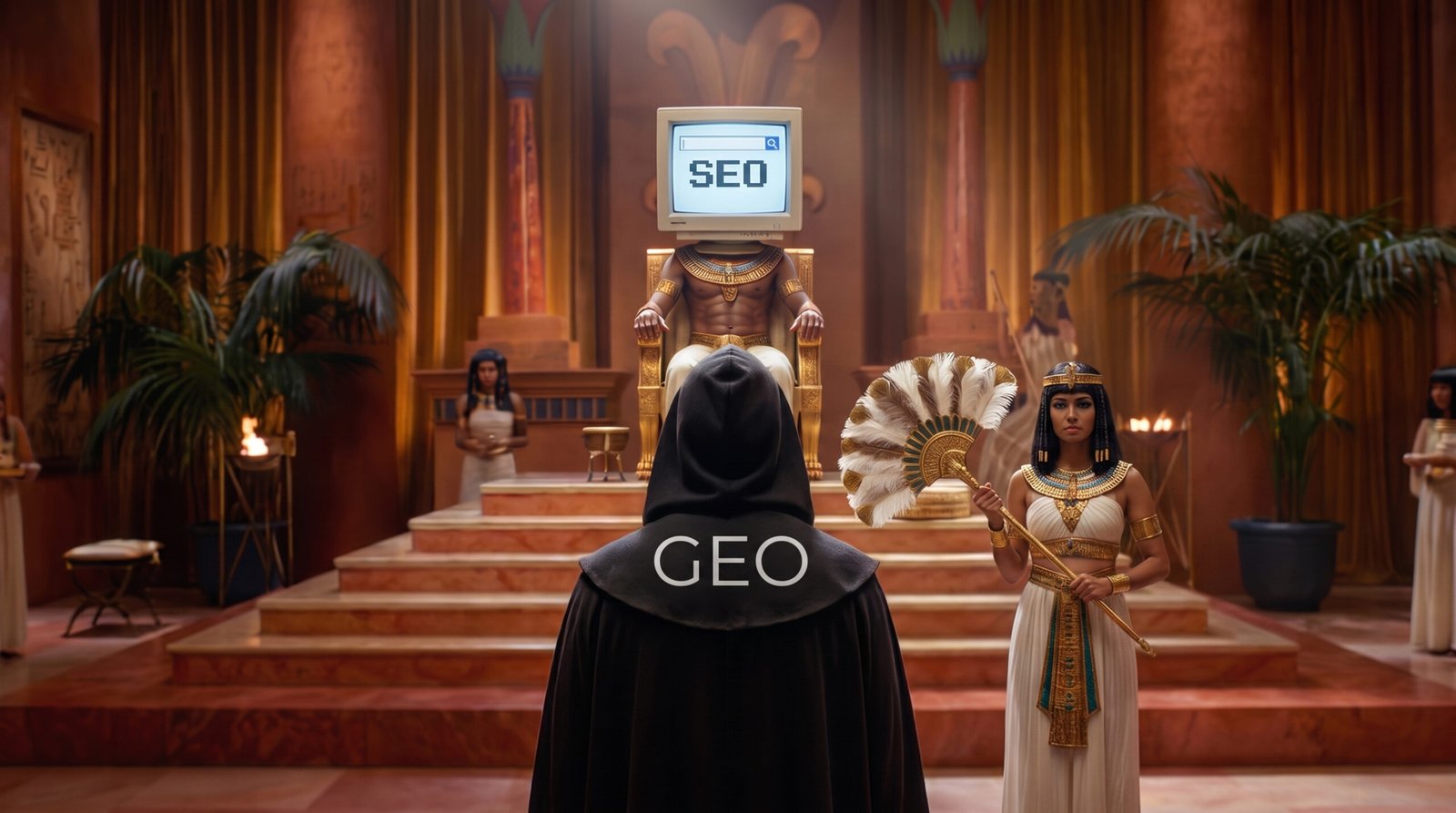
Generative Engine Optimization (GEO) is the practice of optimizing content for AI systems such as ChatGPT, Perplexity, Google AI Overviews and Gemini, so that they cite it as a source. Classic SEO aims for a high ranking in Google’s results list, while GEO makes sure your brand is mentioned in AI-generated answers. GEO does not replace SEO. It complements it, because AI systems often rely on the same authority signals that classic SEO builds. (Source: CDP.com, 2026; Codana, 2026)
If you are looking for a Berlin agency that thinks content, video and technical visibility together, you will find more information on our service page for SEO and GEO optimization.
Why is classic SEO no longer enough in 2026?
Search is changing fundamentally. People increasingly no longer type single keywords into Google and click through a list of results. Instead, they ask complex questions in ChatGPT, Google AI Mode, Gemini, Perplexity or Copilot and get a summarized answer straight away. (Source: onehundred.digital, July 2026)
This has drastic consequences for classic traffic: more than half of all Google searches today end without a single click on an external search result. (Source: marktgetrieben.de, 2026) So the key question is no longer just where you rank on Google, but whether AI systems cite you as a source when someone asks a question.
Even so, classic search remains relevant, especially for transactional queries (“buy shoes Berlin”), for local searches and for image searches. (Source: Nordsteg, 2026) The shift is therefore additive, not a replacement.
What exactly is GEO (Generative Engine Optimization)?
Generative Engine Optimization is the strategic optimization of digital content with the aim of being recognized, processed and cited as an authoritative source in the answers generated by AI-based search and answer systems. (Source: SEO Coach, 2026)
The fundamental difference from classic search engine optimization lies in the goal. While SEO agencies optimize websites for algorithm-based rankings, GEO ensures that brands are cited and referenced in AI-generated answers. (Source: onehundred.digital, 2026) Put differently: SEO optimizes for a results list, GEO optimizes for a generated answer. (Source: Codana, 2026)
In short, and easy to quote: GEO is optimization for AI answer engines, with the goal of being named in the AI answer itself, not just in the sources at the end. (Source: Nordsteg, 2026)
GEO vs SEO: the key differences compared
The table below summarizes the central differences. This structure is particularly well suited to being extracted and cited by AI systems.
| Criterion | Classic SEO | Generative Engine Optimization (GEO) |
|---|---|---|
| Goal | Ranking in position 1 on Google | Being cited in AI answers |
| User action | Click on a link | Reading the answer directly |
| Platforms | Google, Bing, DuckDuckGo | ChatGPT, Perplexity, Gemini, AI Overviews, Copilot |
| Success metric | Clicks, rankings, organic traffic | Citation rate, brand mentions in AI answers |
| Content format | Keyword-optimized long-form articles | Answer-first blocks, FAQs, tables, lists |
| Authority signal | Backlinks, domain authority | Fact density, citability, E-E-A-T signals |
| Traffic quality | High volume, mixed intent | Lower volume, significantly higher conversion rate |
One particularly notable data point: visitors referred by AI convert around 23 times better than classic organic traffic. (Source: Codana, 2026) That means that even though AI traffic is still smaller in volume, its quality is unusually high.
Which ranking factors matter for GEO?
Classic SEO factors such as backlinks and domain authority do not lose their importance in GEO, but they are weighted differently. Backlinks are not the last step but the first: without authority, a page never makes it into the retrieval that makes GEO optimization effective. (Source: Seybold, 2026)
For actually being cited by an AI, structural factors matter most:
- Answer-first principle: The direct answer sits right below the H2 heading, not after a long introduction
- Fact density: At least one unique fact per 80 words noticeably increases the likelihood of being cited
- Tables and lists: Structured content increases the likelihood of extraction by 30 to 40 percent
- Multimedia content: Pages that combine text with high-quality images and short explainer videos are up to 317 percent more likely to be cited in AI summaries
(Source: meineseiteaufplatzeins.de, 2026)
Technical signals also play an important role. In your robots.txt, you should explicitly allow the relevant AI search crawlers such as OAI-SearchBot (ChatGPT Search), PerplexityBot and Claude-SearchBot. Also check whether your CDN, for example Cloudflare, blocks AI bots at the infrastructure level. (Source: marktgetrieben.de, 2026)
How do the individual AI platforms differ?
A common mistake is to assume that all AI systems work the same way. In fact, each has its own preferences:
- ChatGPT relies on information gain and the Bing index. New, differentiating facts are preferred.
- Perplexity rewards extreme freshness and cites transparently, often directly in the answer text.
- Google AI Overviews rely on classic Google signals combined with structured content.
- Claude values structured, readable texts with a clear line of argument.
(Source: dm/digital-magazin, July 2026; meineseiteaufplatzeins.de, 2026)
A multi-platform strategy is therefore a must, because each platform favors slightly different sources. (Source: Codana, 2026)
Is GEO an alternative to SEO?
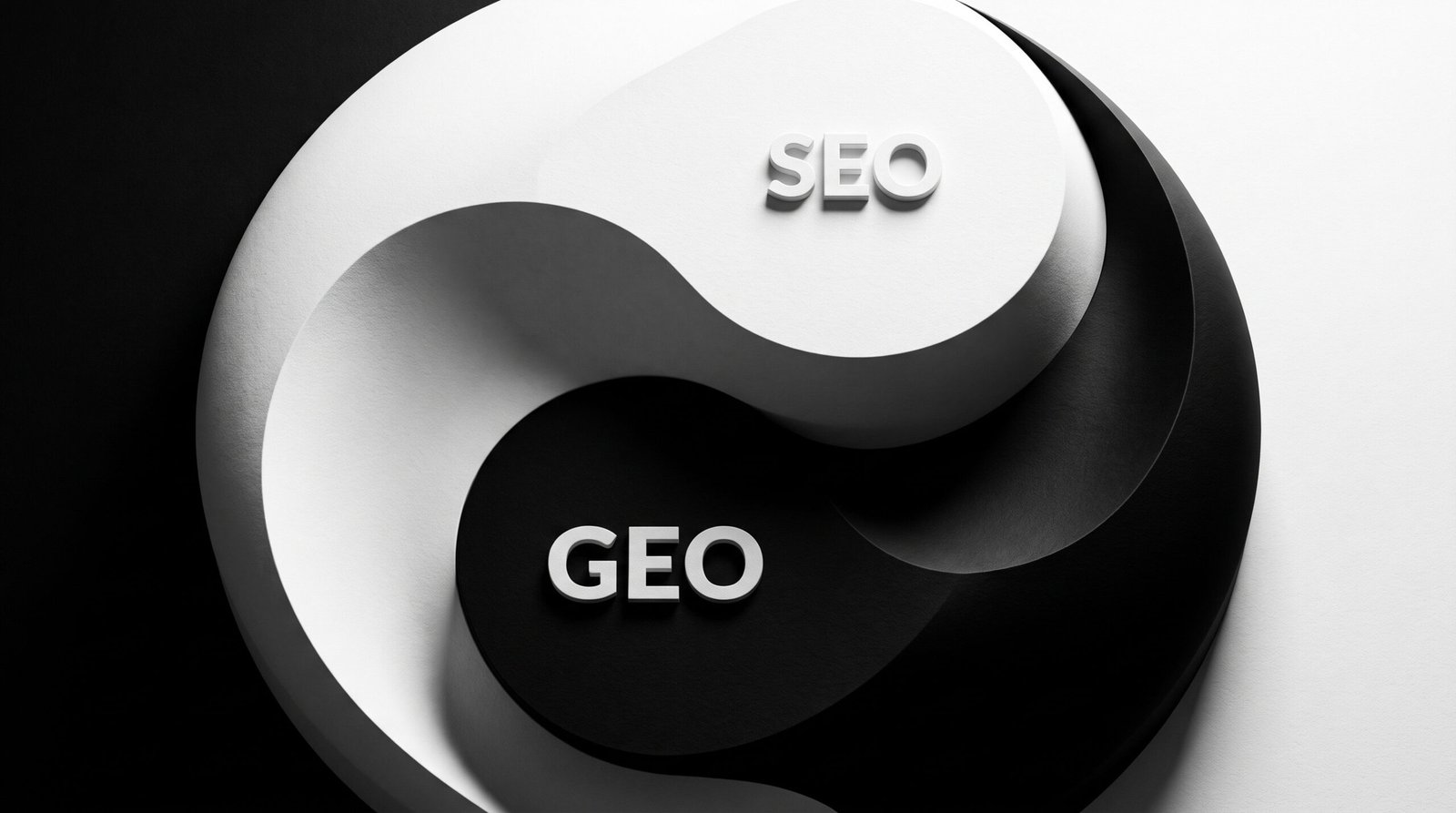
No. GEO is not an alternative but an extension. Without solid technical SEO, search and AI crawlers cannot reliably reach your content in the first place. Without a clear information architecture, the topical context that AI systems need is missing. (Source: onehundred.digital, 2026)
Traditional search still drives most web traffic in 2026, and AI systems rely heavily on the same authority signals that SEO has built up over the years. The shift is additive: you now need to be cited in AI answers as well, not just rank in results lists. (Source: CDP.com, 2026)
A practical example from a real GEO case: a website ranked in position 6 on Google with solid backlinks. Its AI visibility in ChatGPT and Perplexity, however, was zero. After rewording the headings into real search questions, adding answer blocks directly below each heading and implementing FAQ schema, AI mentions for product-related queries rose noticeably, without a single new backlink. (Source: Seybold, 2026)
What should companies in Berlin and the DACH region do now?
For companies that want to stay visible in both worlds in 2026, four practical steps are recommended.
First, restructure your existing core articles according to the answer-first principle. Phrase H2 headings as real search questions and place the direct answer in two to three sentences below them.
Second, implement FAQ schema and Article schema with dateModified on all central content pages. FAQ schema increases the likelihood that content is picked up by AI systems as answer building blocks. (Source: Peter Krause, 2026)
Third, check your robots.txt and CDN settings. No AI crawler can cite what it cannot read.
Fourth, regularly test whether your brand actually appears in AI answers. Define 20 relevant test questions and check them weekly in ChatGPT, Perplexity and Gemini. (Source: SEO Coach, 2026)
By the way, many GEO optimizations are restructuring jobs, not rebuilds. Reworking existing content according to GEO principles can measurably improve the citation rate. (Source: Udo Leinhäuser, 2026)
Conclusion: stay invisible in 2026 and you lose twice

Anyone who wants to stay visible in this new reality needs a strategy that goes beyond classic SEO. That strategy is called Generative Engine Optimization. (Source: SEO Coach, 2026) Anyone who ignores GEO risks becoming invisible in the next generation of search, no matter how good their Google SEO position is. (Source: Nordsteg, 2026)
At ThatWorksMedia in Berlin, we treat SEO, GEO and video SEO as one whole. Less noise. More signal.
Frequently asked questions about GEO vs SEO
What is the difference between SEO and GEO?
SEO optimizes content for rankings in search results lists such as Google’s. GEO optimizes content to be cited as a source in AI-generated answers from ChatGPT, Perplexity, Gemini or Google AI Overviews. GEO does not replace SEO. It complements it.
Does GEO replace classic SEO?
No. Traditional search still drives most web traffic in 2026, and AI systems rely heavily on the same authority signals that SEO builds. The shift is additive, not a replacement.
How do I get cited in ChatGPT and Perplexity?
The key factors are an answer-first structure, high fact density, clear FAQ sections with FAQPage schema, structured content in tables and lists, and technical accessibility for AI crawlers such as OAI-SearchBot and PerplexityBot.
How quickly do GEO optimizations take effect?
Smaller changes, such as adjusting answer structures, can be measurable within a few days. More complex optimizations, such as building topical authority, take weeks to months. GEO is an ongoing process.
Does traffic from AI systems convert better than classic Google traffic?
Yes, significantly. Visitors referred by AI convert around 23 times better than classic organic traffic. The volume is still lower, but the quality is extremely high.
Is FAQ schema important for GEO?
Yes. FAQ schema increases the likelihood that content is picked up by AI systems as answer building blocks. Together with structured answers below every H2 heading, it is one of the most effective GEO levers.