

In short
Yes, in many cases. Since 2 August 2026, advertisers have had to disclose under Article 50 of the EU AI Act when they publish realistic-looking AI-generated images, videos or voices (deepfakes). Separately, under the UWG (the German Unfair Competition Act) and the Medienstaatsvertrag (the Interstate Media Treaty), advertising must always be recognisable as advertising.
Yes, in many cases. Since 2 August 2026, advertisers have had to disclose under Article 50 of the EU AI Act (Regulation (EU) 2024/1689) when they publish realistic-looking AI-generated images, videos or voices (deepfakes). Separately, under the UWG (the German Unfair Competition Act) and the Medienstaatsvertrag (the Interstate Media Treaty), advertising must always be recognisable as advertising. Whether it is a short social media clip, a realistic-looking avatar or a complete commercial, much of this is now produced without a camera crew or a traditional film set. AI advertising in Germany is already standard practice. The technology is impressive, but it also raises questions. One of the most important: do companies actually have to label advertising that was created with AI?
Last checked: 29 September 2026
Free AI Labelling Kit
Decision tree, 20-point checklist, text templates and 28 ready-made labels for your AI advertising under Article 50 of the EU AI Act.
There are two separate levels to keep apart.
1. Advertising stays advertising, with or without AI
In Germany, advertising must always be clearly recognisable as such. This is governed by the UWG (Gesetz gegen den unlauteren Wettbewerb, the German Unfair Competition Act) and the Medienstaatsvertrag (the Interstate Media Treaty).
In practice, that means:
- An Instagram post promoting a product → needs a label such as “Anzeige” (ad) or “Werbung” (advertising).
- A sponsored article on a website → must be clearly separated from editorial content.
- Influencer partnerships are covered too → think “Paid partnership with …”.
Whether the commercial was shot conventionally or generated by AI makes no difference here. Advertising is advertising.

2. New transparency obligations for AI content
Since 2 August 2026, the transparency obligations under Article 50 of the EU AI Act have applied: anyone who publishes realistic-looking AI-generated or manipulated content must disclose that it was created with AI, clearly and at the latest at the time of first contact.
This applies, among other things, to:
- AI avatars or synthetic voices
- Deepfakes or deceptively realistic scenes
- Texts or videos that would be hard to tell apart from “real” content without a notice
The law requires that users can recognise that they are looking at AI content.
For obviously artistic, satirical or fictional works, a notice that does not interfere with the presentation is enough. There is no exemption for advertising.
Practical examples of a transparent label:
- “This video was created with the help of AI.”
- “The voice in this commercial is synthetically generated.”
Further reading:
- Gesetz gegen den unlauteren Wettbewerb (UWG), the German Unfair Competition Act (in German)
- Medienstaatsvertrag 2025 (MStV), the Interstate Media Treaty (in German)
- EU AI Act: overview from the IHK, the Chamber of Industry and Commerce (in German)
- European Commission: FAQ on the transparency obligations under Article 50 of the AI Act
- European Commission: Code of Practice on the transparency of AI-generated content
3. What does this mean for companies and agencies?
In practice, it comes down to two steps:
- Label the advertising, just as before.
- Make the use of AI transparent whenever AI is involved.
Combined notices such as “Anzeige | Erstellt mit KI” (“Ad | Created with AI”) are a simple way to meet both requirements.
4. Why transparency is not a disadvantage
Many companies worry that a notice such as “AI-generated” will weaken the impact of their advertising. Our experience shows the opposite.
- Build trust: customers appreciate it when brands communicate openly.
- Avoid risks: transparency protects against cease-and-desist letters (Abmahnungen) and reputational damage.
- Look modern: making it clear that you use AI shows a capacity for innovation.
Looking for help with AI commercials? Tell us about your project through the contact form.
5. Looking ahead
Further requirements have already been adopted: providers of AI tools must mark generated content in a machine-readable way, with a transition period until 2 December 2026 for systems that were placed on the market before 2 August 2026. In May 2026, the European Commission published draft guidelines on this.
Companies should prepare early:
- Develop internal guidelines (“How do we label AI content?”).
- Choose tools that support transparency.
- Follow legal updates, as the details of implementation are still taking shape.
Conclusion
The answer to the opening question is clear: Yes, AI advertising has to be labelled.
- As advertising, as has always been the case.
- And additionally as AI-generated, whenever synthetic content is used.
Companies that take this transparency seriously are not only on the safe side legally, but also strengthen the trust of their audience.
Want to get started right away? The free AI Labelling Kit includes the labels as PNG files in 16:9 and 9:16.
That Works Media: AI advertising with clarity
At That Works Media, we produce modern, AI-assisted commercials: fast, creative and with a focus on transparency.
Want to use AI in your marketing without taking legal risks? Get in touch. Together we will develop advertising content that is innovative and builds trust.
Disclaimer
This article is for general information only. It is not legal advice and cannot replace individual advice from a specialised lawyer.
Frequently asked questions about labelling AI advertising in Germany
Does advertising always have to be labelled in Germany?
Yes. Under the UWG (the German Unfair Competition Act) and the Medienstaatsvertrag (MStV, the Interstate Media Treaty), advertising in Germany must always be clearly recognisable as such, whether it was produced conventionally or generated by AI.
Is there a specific duty to label AI content as such?
Yes. Since 2 August 2026, Article 50 of the EU AI Act has required that AI-generated content that looks deceptively real, or that would be hard to tell apart from “real” content without a notice (for example synthetic voices, avatars and deepfakes), be identified as such.
Is an “advertising” label enough if a commercial was created with AI?
No. Two steps are needed: (1) label the advertising (“Anzeige” or “Werbung”) and (2) disclose the use of AI (for example “Created with AI”).
Are there exceptions to the labelling duty for AI content?
Only to a limited extent. For obviously artistic, satirical or fictional works, a notice that does not interfere with the presentation is enough. There is no exemption for advertising.
Which wordings are suitable?
- “This video was created with the help of AI.”
- “The voice in this commercial is synthetically generated.”
- “Anzeige | Erstellt mit KI” (Ad | Created with AI).
What are the consequences of failing to label?
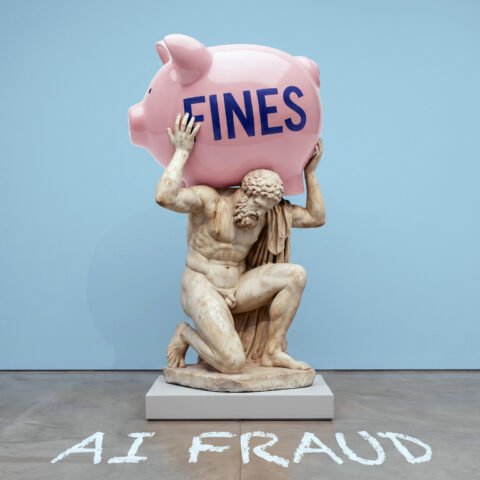
You risk cease-and-desist letters (Abmahnungen), fines and reputational damage. Fines under the EU AI Act can reach up to 15 million euros or 3 percent of worldwide annual turnover. Your audience may also lose trust in you.
How should companies prepare?
- Define internal labelling guidelines (advertising label plus AI notice).
- Set clear workflows for AI productions and approvals.
- Monitor and document legal developments regularly.
Note and disclaimer: this FAQ is for general information only and is not legal advice. For binding guidance, please consult a specialised lawyer.


Planning a project?
We produce AI commercials in Berlin. Tell us about your project through the contact form.