
In short
An explainer video converts when it has one audience, one problem, one promise and one clear next step, and when it sits on the page where that next step happens. AI-generated explainers are a fitting format when the concept does not need real people or a custom illustration style. At That Works Media, AI-generated explainers start at 2,500 EUR net, and 2D animated explainers of 60 to 90 seconds start at 4,000 EUR net.
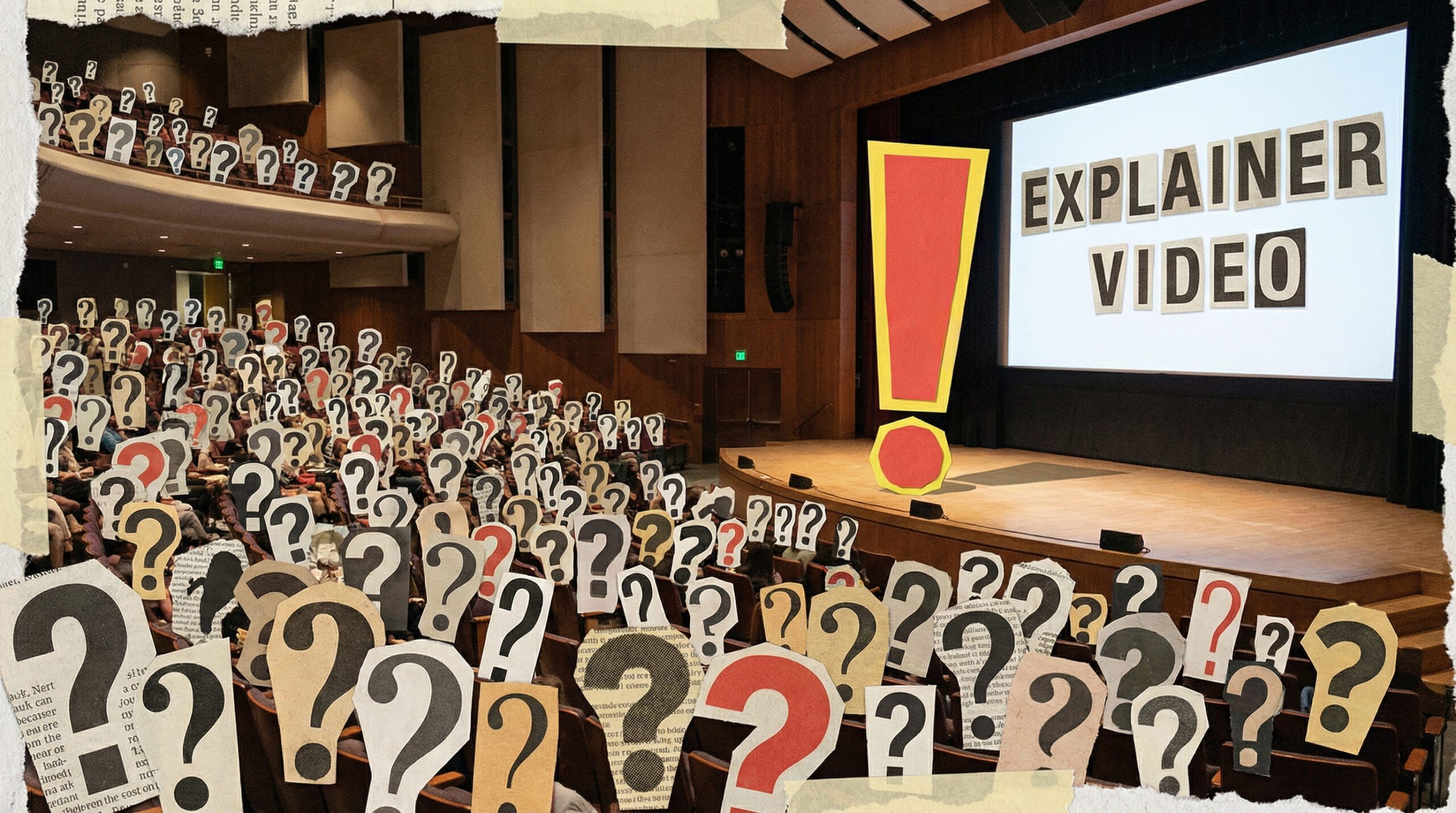
Most explainer videos fail for editorial reasons, not technical ones: the script tries to say everything, the video sits far down the page, or nobody decided what viewers should do afterwards. This guide covers what we look at when we plan an explainer that is meant to drive action, how AI-generated and classic animated explainers differ, and what to prepare before you brief a production company. Where we share an opinion rather than a fact, we say so.
What makes an explainer video convert?
An explainer converts when it removes one specific hesitation for one specific audience and ends with one action. There is no formula that guarantees a conversion rate, and we do not promise one. These are the editorial principles we apply, based on our own production work:
- One audience, one problem. A video for people who have never heard of your product needs different content than one for people comparing vendors.
- The problem comes before the product. Viewers should recognize their situation in the first seconds, before they hear a product name.
- One promise. Three or four features in one video usually means none of them sticks.
- One call to action. Whatever the next step is (request a quote, start a trial, read the pricing), the video should end on it, and the page around it should offer exactly that.
- Understandable without sound. Many people watch with the sound off, so subtitles and clear on-screen text make the video usable in more situations. This is our working assumption, not a measured figure.
If you want to know whether a video works, measure it on your own page: compare conversions or sign-ups for visitors on the page before and after the video went live, or run an A/B test with and without it. Your own numbers are more reliable than any industry average.
AI explainer video or classic animation: which format fits?
Choose an AI-generated explainer when the concept does not depend on real people or a hand-built illustration style, and choose 2D or 3D animation when a distinctive visual identity is part of the message. The service page of That Works Media lists both options, and the table below summarizes the differences as we see them in our work. Prices are net guide prices from our explainer video service page, checked on 4 November 2026.
| Criterion | AI-generated explainer | 2D animated explainer |
|---|---|---|
| Starting price (net) | from 2,500 EUR | from 4,000 EUR for 60 to 90 seconds; typically 4,000 to 12,000 EUR |
| Visual style | Generated imagery; consistency across scenes needs careful control | Fully designed characters, icons and motion graphics in your corporate design |
| Good fit | Concepts without real people, process explanations, quick tests of a message | Brand-defining videos, complex stories, long-lived assets |
| Languages | Voice-over and subtitles in multiple languages on request | Voice-over and subtitles in multiple languages on request |
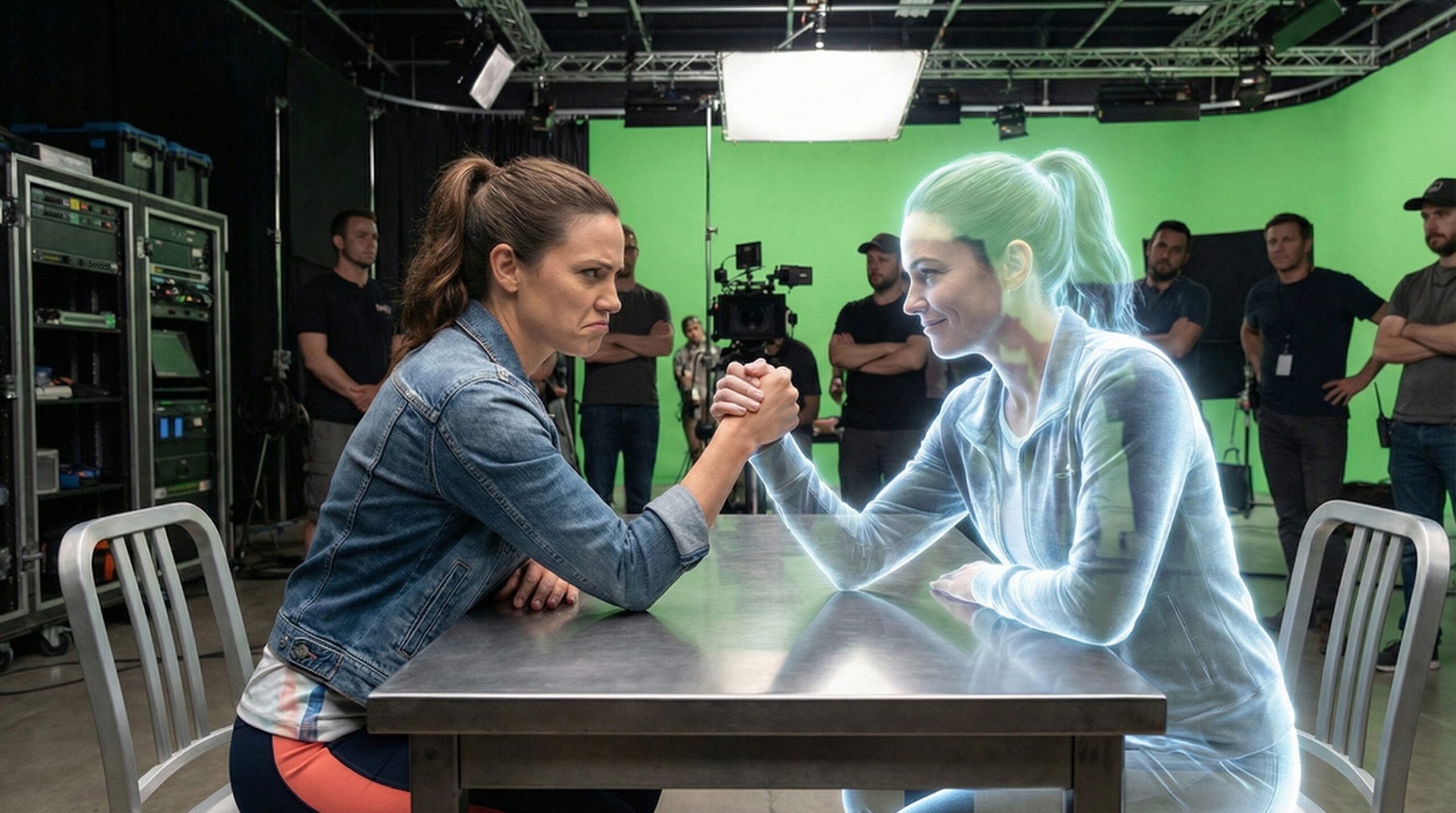
The final price depends on length, style, languages and complexity. For a broader comparison of AI and classic production, see our post on AI video or classic image film, and for AI spots in particular, what an AI commercial costs.
How should you brief an explainer video?
A good brief answers six questions before anyone opens a design tool. Our service page notes that we need basic information about your company, your products or services, your target audience and the message you want to convey; the checklist below turns that into questions you can answer in one sitting.
- Who is the viewer, and what do they already know?
- What problem or hesitation should the video address?
- What is the single message they should remember?
- What should they do right after watching?
- Where will the video be shown: landing page, product page, presentation, social media, sales conversations?
- Which languages and formats do you need (for example horizontal for the website, vertical for social media)?
Our process runs in five steps: concept, script and storyboard, production and animation (including graphic design, voice-over and music), post-production, and delivery in formats for web, presentations and social media. For learning content, a different logic applies; see how much a learning video costs.
Looking for help with AI videos? Tell us about your project through the contact form.
Which explainer fits which funnel stage?
Different stages of the buying process need different videos, and a single video for everything usually serves none of them well. The table is our editorial recommendation, not a rule, and the lengths are orientation values rather than research results.
| Stage | Viewer’s question | Content of the video | Suggested placement |
|---|---|---|---|
| Awareness | Do I have this problem? | Name the problem and hint at the solution; keep it short | Social media, ads, top of the home page |
| Consideration | How does this solve it? | Walk through how the product or service works, with a few concrete steps | Product or service page |
| Decision | Is this right for me? | A realistic scenario, what happens next, one clear call to action | Pricing page, quote request page, sales emails |
With AI-generated production starting at 2,500 EUR net, a small set of videos for several stages can be a realistic plan. We would still start with one video for the stage where you lose the most visitors and expand once you know what works.
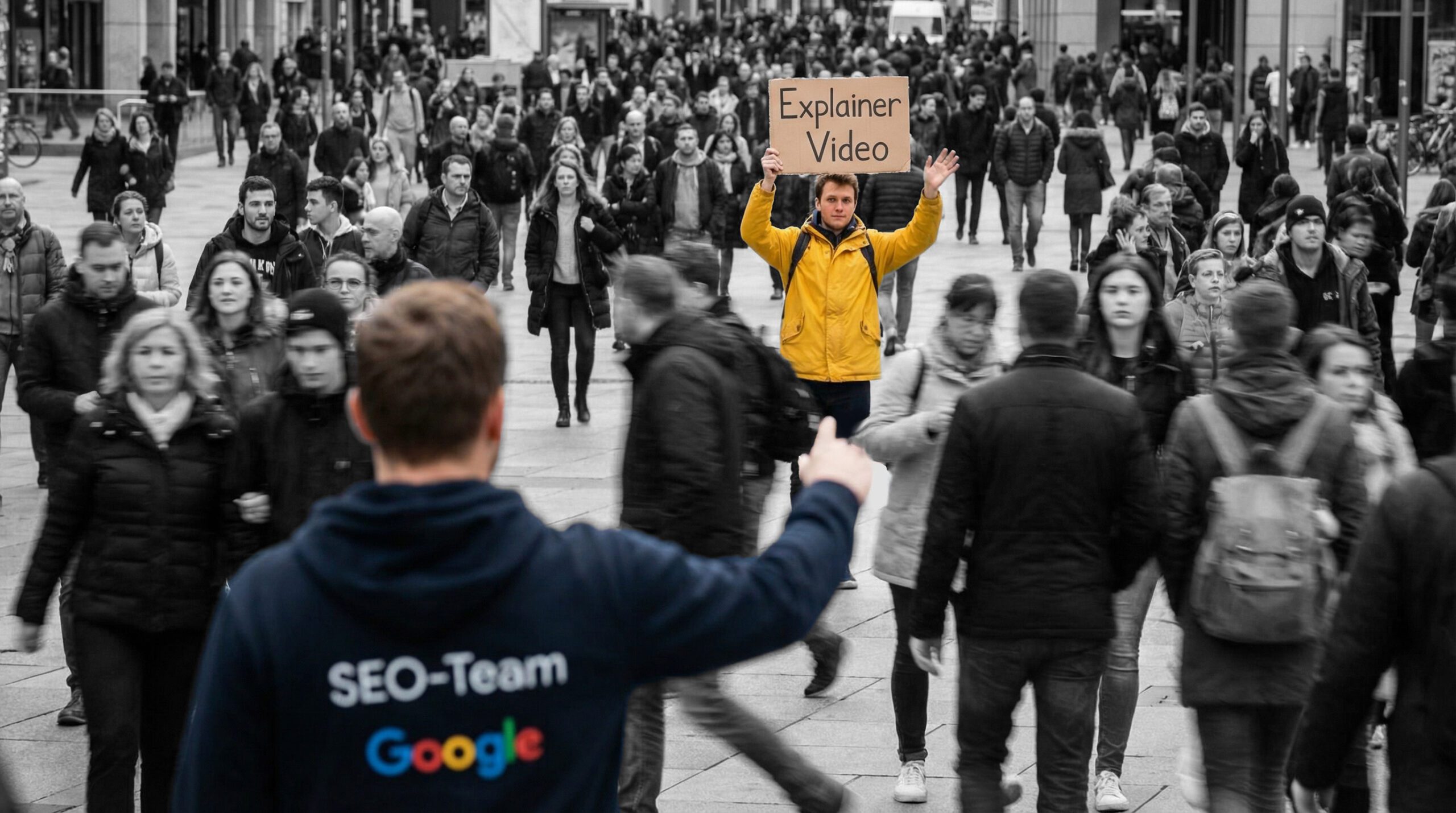
Do explainer videos help SEO?
They can, but not automatically. Google’s documentation says that its main video features, including Video mode, require a dedicated watch page where the video is the main content of the page. A blog post or landing page that merely embeds a video is not treated as a watch page, though it can still appear as a normal text result. We therefore treat video as a way to help visitors on the page, not as a ranking shortcut.
If you do want your video to be eligible for video features, Google recommends these basics:
- Embed the video directly on an indexable page, not behind a click or a login.
- Provide a stable thumbnail image and a unique title and description for each video.
- Add
VideoObjectstructured data with the required properties name, thumbnail URL and upload date; content URL and embed URL are recommended.
Google also states that it does not guarantee that structured data produces any particular search feature. Our guide to GEO and SEO explains how this fits into visibility in AI-generated answers.
Where should you place and distribute an explainer video?
Place the video where the decision happens and make the next step visible right beside it. A few practical points from our projects:
- Landing or service page: position the video near the top, with the call to action next to it rather than far below.
- Social media and ads: prepare cuts in the aspect ratios and lengths each platform uses, and replace the closing call to action with one that fits that channel.
- Email and sales: a link to a page with the video often works better than an attachment.
- Presentations and trade shows: plan a version that works without sound; see AI videos at trade shows.
Our service page lists delivery in the usual formats and aspect ratios for websites, presentations and social media.
Do AI-generated explainers have to be labelled?
Sometimes. If an AI-generated video shows realistic people, voices or scenes that could pass as authentic, Article 50 of the EU AI Act requires deployers to disclose that the content is artificial, and the article applies from 2 August 2026 according to the text published on artificialintelligenceact.eu. For clearly artistic or fictional works, the duty is narrower and only requires a notice that does not disturb the presentation. Whether and how a specific explainer is affected depends on the video, and several details are still being clarified in practice. This is not legal advice; see our guide on whether AI ads have to be labelled in Germany and check the specific case with a lawyer.
Frequently asked questions
What does an explainer video cost at That Works Media?
AI-generated explainers start at 2,500 EUR net. A 2D animated explainer of 60 to 90 seconds starts at 4,000 EUR net and typically costs between 4,000 and 12,000 EUR net, depending on length, style, languages and complexity.
Do you offer explainer videos in several languages?
Yes. According to our service page, we offer voice-over in multiple languages and subtitles in several languages on request.
Can you use our corporate design?
Yes. Our service page states that your corporate design can be integrated into the video.
Is an explainer video the same as an explanatory film?
The terms are used interchangeably. An explanatory film can additionally include real scenes or interviews.
How do I know whether my explainer video works?
Measure it against a goal you set before production, such as sign-ups or quote requests from the page it sits on. Compare the period before and after launch, or test the page with and without the video.
Talk to us about your explainer video
If you are planning an explainer, see our explainer video service for formats and guide prices, or send us your project through the contact form.
Sources
- That Works Media: Explainer videos (prices, formats, process, FAQ), checked 4 November 2026
- Google Search Central: Video best practices
- Google Search Central: Video structured data (VideoObject)
- artificialintelligenceact.eu: Article 50, Transparency obligations
- That Works Media: Do AI ads have to be labelled in Germany?

Planning a project?
We produce AI videos in Berlin. Tell us about your project through the contact form.